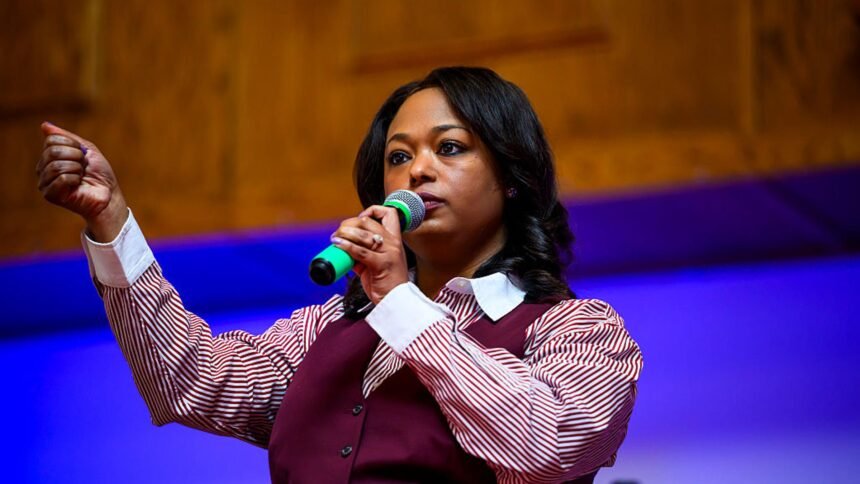
“What we want to do is extend democracy to our workplace and our housing and society at large, sort of deciding the ways our cities run, our jobs run, our housing runs, as opposed to right now, we think we’re in sort of a dictatorship of capital—the big corporations kind of make the decisions about everything, really,” says Megan Romer, the co-chair of the DSA.
Democratic socialism in the U.S., Farinella says, is not the socialism seen in the former Soviet Union, which was an autocratic system that eliminated capitalism by putting all major industries under centralized government control. Democratic socialists don’t want large corporations to be controlled by the government, and don’t want an autocracy; rather, they want to place the power of decision-making in the hands of the people through a democratic process.
Farinella says that democratic socialism also isn’t the kind of social democracy seen in Scandinavian countries, which reject authoritarianism and, in his words, “combine free market capitalism with high taxes” to fund social programs such as health care and education. Democratic socialists, meanwhile, don’t support capitalism (though some self-described democratic socialists have suggested that it is possible for democratic socialism and capitalism to exist together).