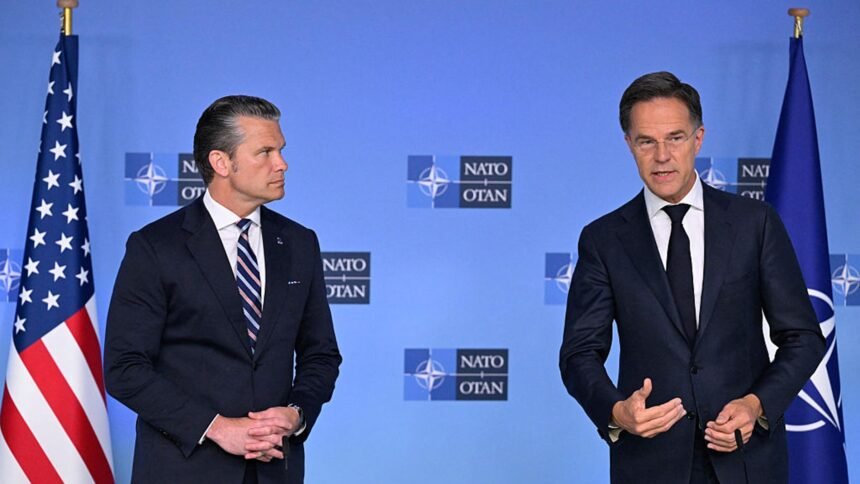
Hegseth may have been referencing Canadian Prime Minister Mark Carney’s speech at Davos in January, during which he said “every day we’re reminded that we live in an era of great power rivalry, that the rules-based order is fading, that the strong can do what they can, and the weak must suffer what they must.”
Following Hegseth’s address, NATO Secretary General Mark Rutte acknowledged there is a “broad agreement among allies on the need to step up” and said the U.S.’ position, on this front, was “completely acceptable.”
Last month, Washington told NATO allies it would be scaling back the number of military assets it dedicates to the alliance—an attempt to remedy an “unhealthy co-dependence in the NATO Force Model on U.S. forces,” according to NATO’s top commander, U.S. Air Force General Alexus Grynkewich.
The Trump Administration had earlier announced it was withdrawing 5,000 troops stationed in Germany. U.S. Republican lawmakers on the Armed Services Committee expressed concern that the move could send “the wrong signal to [Russian President] Vladimir Putin.”