


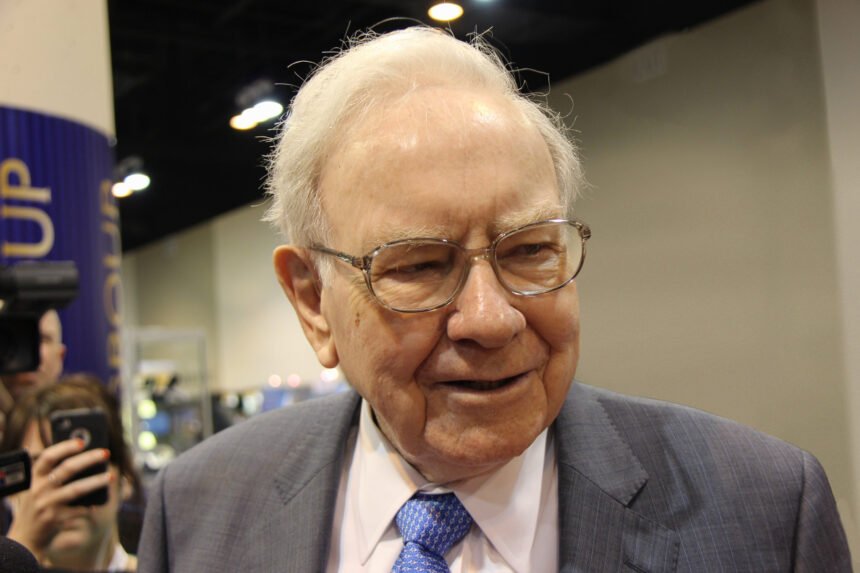
Warren Buffett surprised Berkshire Hathaway (BRK.A -0.36%) (BRK.B -0.37%) shareholders earlier this month when he announced at Berkshire’s annual meeting that he would be stepping down as CEO once the year ended. Buffett has run Berkshire for about six decades and made many shareholders rich in the process, with Berkshire’s stock generating incredible returns.
Now, the Oracle of Omaha will pass the baton to Berkshire’s vice chair, Greg Abel. Buffett had previously announced that Abel would take over as CEO once he stepped down, although the timeline hadn’t been clear until recently. With Berkshire’s massive $350 billion hoard of cash, Abel is taking over Berkshire at a time when the company has a fortress balance sheet and a war chest ready for any opportunities that should arise. Here are some moves Abel might make once he officially becomes CEO.
What will he buy?
Many have speculated that Buffett was stockpiling cash in preparation to hand the reins over to his successor. Buffett has, of course, denied this. While Abel and the rest of the team at Berkshire are more than capable of carrying the torch, it’s still a big change, given that Buffett is arguably the greatest investor of all time and that investors viewed his role as CEO — even at the age of 94 — as a port in the barrage of storms that have become common in the market since the COVID-19 pandemic in 2020.
Image source: Motley Fool.
It would be surprising to see Berkshire continue building cash at this pace forever, and Buffett himself has said the Berkshire team would always prefer to put its money to work in productive businesses. However, one problem for Berkshire is that its success has swollen its size. The market cap of the company has surpassed $1 trillion, and Berkshire’s equity portfolio has surpassed $300 billion on numerous occasions in the past. That makes buying positions in stocks difficult because Berkshire likes to maintain less than a 10% ownership in companies when possible, and it makes many companies too small to move the needle.
One thing we have seen Berkshire do is continually increase its stake in many of its existing holdings. Berkshire isn’t afraid to go big like it did when it took Apple to 40% of its total portfolio. I think this trend may continue. Abel has been running Berkshire Hathaway Energy for some time, and it’s clear that Berkshire’s team of investing lieutenants think that domestic energy and oil producers are going to continue to be incredibly valuable. This makes me wonder if Berkshire will one day purchase Occidental Petroleum outright. The company already owns 28% of outstanding shares, and many of Berkshire’s more recent acquisitions have been in the energy sector.
Buffett has said Berkshire has no interest in fully acquiring Occidental, but I wonder if this will change with Abel running the company. Occidental’s CEO, Vicki Hollub, has recently said that a buyout by Berkshire “would be a dream come true.” Other purchases are tough to predict, but I wouldn’t expect Berkshire’s investing lieutenants to stray too far from Berkshire’s proven strategy. Many, like Ted Weschler and Todd Combs, already run about 10% of the portfolio, and some of their recent purchases, like Sirius XM, seem to be following Buffett’s long-term, value-oriented playbook.
Expect capital distributions to pick up
One thing I would expect Abel to do with Berkshire’s massive cash hoard is to increase capital returns to shareholders. Berkshire hasn’t been buying back as much of Berkshire’s stock as it normally does.
One possible reason is that Berkshire’s stock is too highly valued, but Abel may not be afforded the same luxury as Buffett by shareholders, who will likely expect or possibly demand a steadier stream of buybacks. Buffett was certainly shareholder-friendly and repurchased plenty of Berkshire stock, but Abel probably can’t sit on hundreds of billions of cash for as long as Buffett can.
This brings me to another area of capital deployment that I think Abel will strongly consider: Launching a dividend. Berkshire has never paid a dividend, simply because Buffett thought he could deploy capital better — and he was right. But, once again, Abel probably doesn’t have this luxury. Given how Berkshire’s size makes it more difficult to deploy capital, it makes more sense to pay a dividend now.
A dividend would also likely draw in a new investor base. Furthermore, a dividend aligns with Berkshire’s brand. The company is not only one of the best at deploying capital, but it’s been viewed as a flight to safety during times of market turbulence. This is part of the reason the stock has crushed the broader market this year. Investors like the company’s diversity of businesses, strong earnings and cash generation, and strong management team. Adding a sturdy dividend only boosts this brand, in my opinion.
Bram Berkowitz has no position in any of the stocks mentioned. The Motley Fool has positions in and recommends Apple and Berkshire Hathaway. The Motley Fool recommends Occidental Petroleum. The Motley Fool has a disclosure policy.


