


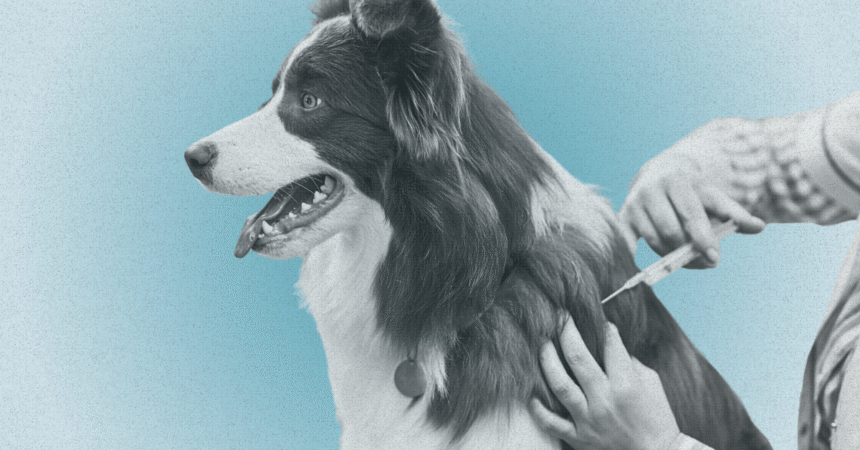
When Sylvalyn Hammond started practicing veterinary medicine in 2018, she rarely encountered pet owners who wanted to skip their dogs’ vaccines. The first time it happened, “I almost thought they were joking,” she recalls. “I was so shocked that I think I might have laughed.”
Now, just a few years later, Hammond deals with anti-vaccine sentiment at least a few times a week at her office in Charleston, S.C. “We’re seeing vaccine hesitancy in pet parents rising exponentially,” she says. “I’m much more prepared for these conversations now, because I understand that I usually have one chance to win these pet parents back and place credible data and information in front of them.”
Experts say that growing misinformation and concerns about vaccines for pets—happening in tandem with plummeting childhood vaccination rates and efforts to end vaccine mandates—represent a serious public-health issue that has ramifications for humans as well as their four-legged family members.
A COVID turning point
There’s no hard data to quantify exactly how many people are opting out of vaccinating their pets, but researchers have found that vaccine skepticism is indeed prevalent: In one 2023 survey of more than 2,000 pet owners, 52% expressed negative views of canine vaccines. While 37% of them believed vaccines could cause their dogs to develop autism (a fear unsupported by any scientific evidence), 22% questioned the jabs’ efficacy, and 30% were concerned about whether they were truly important.
Matt Motta, an associate professor of health law, policy, and management at Boston University’s School of Public Health, co-authored that research with a team that included his sister, a veterinarian. His findings suggest that COVID vaccine hesitancy has led to a “spillover effect,” with people who hold negative attitudes about human vaccines being more likely to hold negative views about vaccinating their pets, too. “The way that people feel about one form of vaccination spills over to shape the way they feel about all forms of vaccination,” he says. “Our partisan identities are so central to our understanding of our sense of self, especially now in a hyper-polarized America, that it’s not at all surprising to see that happen.”
Read More: Why You Feel Anxious After Drinking Coffee
When Motta did his research, the Make America Healthy Again (MAHA) movement didn’t exist. Yet he expects that many who support relaxed vaccine mandates for themselves and their kids feel similarly about their pets. “That is the overlap we demonstrated in our research—we just didn’t call it MAHA at the time,” he says. “There’s this idea that we’re over-medicating, over-vaccinating, and that we can’t trust the scientific community and medical community to have our best interests at heart. People believe that’s true for both humans and, apparently, for our pets as well.”
That resonates with Simon Haeder, a health services and policy researcher at the Ohio State University who has also studied vaccine hesitancy among pet owners. “It seems to be that the exact same kind of things are happening on the pet side: the concerns about side effects, the concerns about your dog developing some disease, people being worried about too many shots at the same time, people thinking that natural immunity is just better,” he says. “What you see on the human side gets replicated on the pet side, which does make sense in some ways, because for most people, pets are very, very close and human-like.”
The cost of skipping vaccines
Some vaccines—like those that protect against rabies—are required by law in most parts of the U.S. Core vaccines, including those against parvovirus and distemper, are recommended but not mandated for all dogs and cats. Exactly which your pet needs will vary based on factors like age, geographic area, and exposure risk from daily activities (like frequent trips to doggy day-care or dog parks).
“They’re very tailored,” says Michael Bailey, a veterinarian and president of the American Veterinary Medical Association. Yet every pet—even indoor cats—needs the rabies vaccine to protect themselves, other animals, and all the humans they might come into contact with. “Here’s the good news: We have eliminated canine rabies virus in this country 100%,” he says. “That doesn’t mean we’ve eliminated rabies. There are other kinds of rabies—raccoon rabies and bat rabies—but canine rabies, which is very, very potent, has been eliminated, and we’re trying to keep it that way.”
Pet owners are often concerned that vaccines are unnecessary, unsafe, or ineffective. Many describe rare side effects they read about online, like anaphylaxis. Yet “the data is very strong that these are safe for animals,” says Mary Combs, a veterinarian at Lovet Pet Health Care in Glendale, Ariz. “Our most common reactions are very mild: some tenderness at the source, a little bit of tiredness, and the dog or cat might be sore.”
Read More: 7 Polite Phrases That Are Still Worth Saying
Hammond’s clients often fall prey to misinformation spread online by pet health influencers. “They’re putting out this content saying there’s a high risk of autoimmune diseases, so the animal’s immune system is going to be compromised for life,” she says. “The pet’s not going to be healthy, they’re going to have a higher risk of allergies and cancer and gastrointestinal disorders, they won’t live as long. There’s zero credible evidence to support these claims, but once that seed is planted, fear spreads faster than facts.”
The effects of skipping vaccines can be devastating. When Hammond worked at an emergency veterinary care office, she would see unvaccinated puppies with canine parvovirus, which is highly contagious and often fatal. “I have held puppies and they’ve literally died in my arms because none of my medications are treating what they’re fighting,” she says. “I’m the one who has to see it, and then I have to be the one to tell you that your dog died or is going to die from a preventable disease.”
Combating the rise in vaccine skepticism
When Hammond talks to clients who aren’t sure if they want to vaccinate their pets, she tells them she can understand why vaccinating their beloved pet seems scary. Then she looks them in the eye and talks them through years of safety data. “I’m usually able to get them to give their pets the vaccines, and then once they do the first round and everything goes fine, and they see that their dog isn’t going to suddenly combust, I can win them over,” she says. “But it does take a very good, collaborative conversation.”
Combs’ practice has a policy that they won’t treat dogs that aren’t vaccinated for rabies; similar policies exist at some grooming shops and other pet-related businesses. While some of her patients’ owners outright refuse certain vaccines, she’s found that many are open to reconsidering their stance, especially when they learn about the deadly ways vaccine-preventable diseases could affect their pets. “A large part of my job is education,” she says, “and I take that seriously.”
Read More: Here’s How to Know You’re Talking to a Narcissist
As the Trump Administration continues to question the safety and efficacy of established vaccines long proven to be safe, Motta worries that lawmakers will similarly politicize pet vaccines and take action to roll back rabies vaccine requirements or make it easier for pet owners to seek exemptions. (Exactly what qualifies for a medical exemption varies by state, but vets can typically provide a post-exam certificate noting that a vaccine would endanger a pet’s health, usually due to a prior adverse reaction or an immune-mediated illness like inflammatory bowel disease.) The very idea might have sounded “preposterous” a decade ago, he says, but it’s no longer a stretch of the imagination. “If we give dog parents an out to not vaccinate, our work suggests they might take it,” he says.
That’s why fact-based, pro-vaccine messaging is so important, Motta says. One strategy he believes could make an impact is sharing stories of people who regret not vaccinating their pets. When he did a mock campaign focused on animals who became sick with respiratory disease—and whose owners wished they had chosen to vaccinate—“we found that was a very impactful motivator for people,” he says. “In my view, the absolute best communicators of the science are the science skeptics. They’re the people who say, ‘I used to be like you, but I changed my mind, and here’s why.’”


