


Robert Triggs / Android Authority
C’mon, Google. What are you thinking?
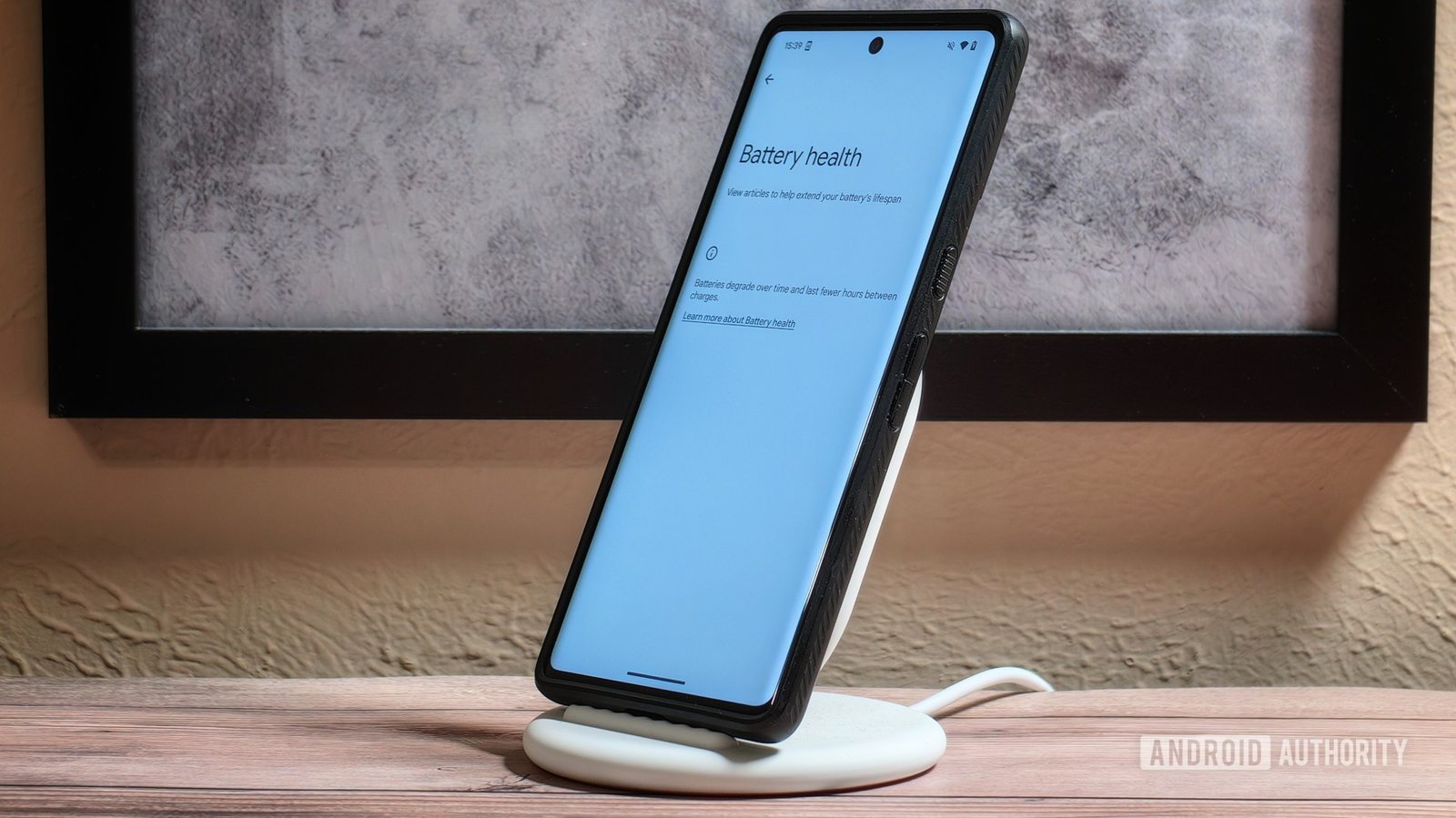
This is the first thought that came to mind when I saw the news about Android 16’s Battery Health feature. As the name suggests, Battery Health provides a glanceable overview of your device’s battery health, showing its current capacity at any given time. Batteries naturally degrade over time, and especially for older devices, knowing how a battery is aging is crucial information.
Unfortunately, we now know a lot of Pixel owners won’t get this feature at all. Google recently confirmed that Battery Health only works on the Pixel 8a and newer phones, leaving the main Pixel 8 and Pixel 8 Pro, Pixel 7 series, Pixel 6 series, and all other older Pixels left in the dust.
It’s a mind-boggling decision, and, arguably, one of the most annoying I’ve seen Google make in a while.
What do you think about Google limiting Battery Health to newer Pixels?
13 votes
Why the Battery Health fiasco is so ridiculous
Mishaal Rahman / Android Authority
Before we go any further, I want to make one thing very clear. It’s OK for companies to restrict certain features to newer/more powerful devices. We see this all the time in the Android world, and usually, it’s done for an apparent reason.
For example, the Samsung Galaxy A36 doesn’t have all of Samsung’s Galaxy AI features. Why? Because its lower-end Snapdragon 6 Gen 3 chipset simply can’t handle all of them. Google has had to do this with its Pixel phones before, too. The Pixel 9a’s limited RAM means it has a pared-down Gemini Nano AI model, resulting in missing features like Pixel Screenshots and Call Notes. It’s annoying, but it makes sense why those things aren’t there.
What’s not OK, however, is when basic functionality is withheld from phones with no good explanation as to why. That’s what we’re seeing with this Battery Health fiasco.
Battery Health is about as simple as software features get. In fact, it’s barely a feature at all and really just a new option in the settings app. The entire Battery Health page consists of the following: your phone’s current battery capacity (and whether it’s normal or not), articles about battery health, and your charging optimization settings. That’s it.
As a reminder, Google says Battery Health isn’t coming to older Pixels “due to product limitations.” While I don’t want to say Google is outright lying, I’m struggling to see what “limitations” are keeping Battery Health exclusive to the Pixel 8a and Pixel 9 series.
I’m struggling to see what ‘limitations’ are keeping Battery Health exclusive to the Pixel 8a and Pixel 9 series.
For context, Google has been working on Battery Health since as early as December 2023. That’s when the feature first appeared in Android 14 QPR2 Beta 2, and it’s the same year the Pixel 7a, Pixel 8, and Pixel 8 Pro were released.
If Google was testing Battery Health when those were the newest phones in its lineup, what gives for none of them being compatible with the feature now? And if the Pixel 8, Pixel 8 Pro, and Pixel 8a all have the exact same chip, why is the cheaper Pixel 8a supported but the flagship Pixel 8 series isn’t? It doesn’t make any sense.

Robert Triggs / Android Authority
Pixel 8 Pro
Adding to the frustration is that a feature like Battery Health is most useful on phones that are a few years old. Pixel 9 owners probably don’t need to worry about their device’s battery health quite yet, but someone with a Pixel 8, Pixel 7, or Pixel 6 could absolutely benefit from that information. Yet, for whatever reason, Google doesn’t seem to agree.
It’s all the more perplexing when you look at the iPhone. Apple added its own Battery Health feature in 2018 with iOS 11. It works exactly as Battery Health in Android 16 does, and it’s compatible with iPhones as far back as the iPhone 6 — a phone released over a decade ago.
A bad look, no matter how you slice it

Robert Triggs / Android Authority
If you recall, this is the second time in less than a week we’ve spotted a company withholding software features without a justified reason to back it up. Late last week, Galaxy S23 users found that their One UI 7 update was missing several features available on the S24 and S25, despite said features supposedly running fine on the “old” S23 phones.
It’s a bit ironic that Samsung and Google — the two Android brands promising seven years of updates for many of their phones — are the ones that find themselves in this situation. That update policy looks great on paper, but when one- and two-year-old phones are missing features they shouldn’t be, how much does that matter?

Paul Jones / Android Authority
Pixel 8a
Of course, Battery Health is just a small part of Android 16. From what we’ve seen so far, Android 16’s other hallmark features — including its new blurred UI, Material 3 Expressive design language, and quirky Bubble Bar multitasking — will be available on all supported Pixel phones without a problem. But if all of those features will presumably work just fine, what’s stopping Battery Health from being there?
If there is a technical limitation that makes it impossible for Battery Health to run on the Pixel 8 series and other older models, fine! But if that’s the case, I think Google needs to explain that limitation. From the outside looking in, this smells like a ripe case of planned obsolescence, and true or not, that’s not a good look to have.


