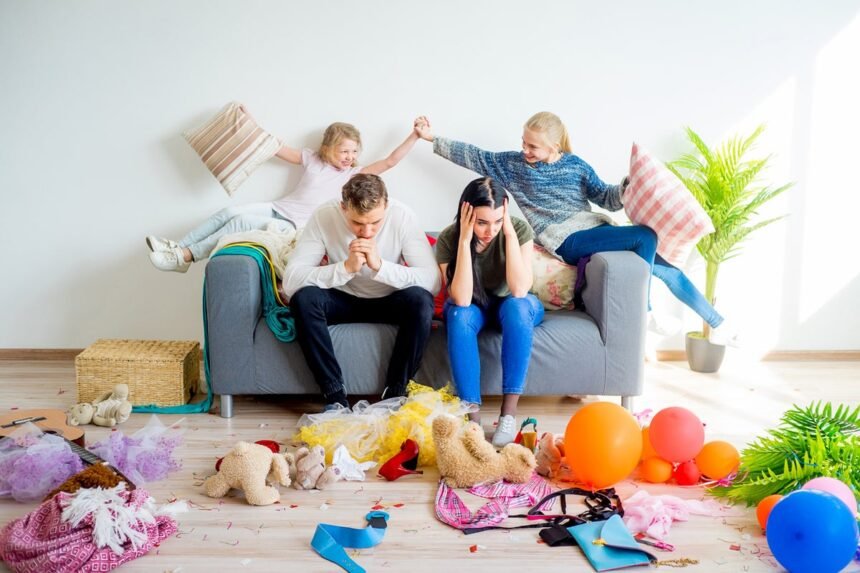
Kids need things, but they grow out of their toys, clothes and furniture so quickly.
Families can be left struggling with clutter, as seen on decluttering shows like BBC One’s Sort Your Life Out where families wade through large amounts of toys and children’s clothes.
Children and their parents are also under ever increasing pressure to buy more. Adverts are stealthily embedded into online content and games. Kidinfluencers create videos of themselves unboxing new toys, piling on the pressure to purchase.
Large volumes of clutter can cause stress in households. As well as the general feeling of things getting out control, there’s the endless environmental guilt that’s involved. Most plastic toys with electrical parts can’t be separated in recycling, for example, so they end up in landfill.
To explore how best to reduce the stress and environmental consequences of children’s stuff, as part of my research for a book I am writing on minimalism, I interviewed 12 minimalist parents who intentionally try to live with fewer belongings for themselves and their kids. Here are five ways they manage kids’ clutter:
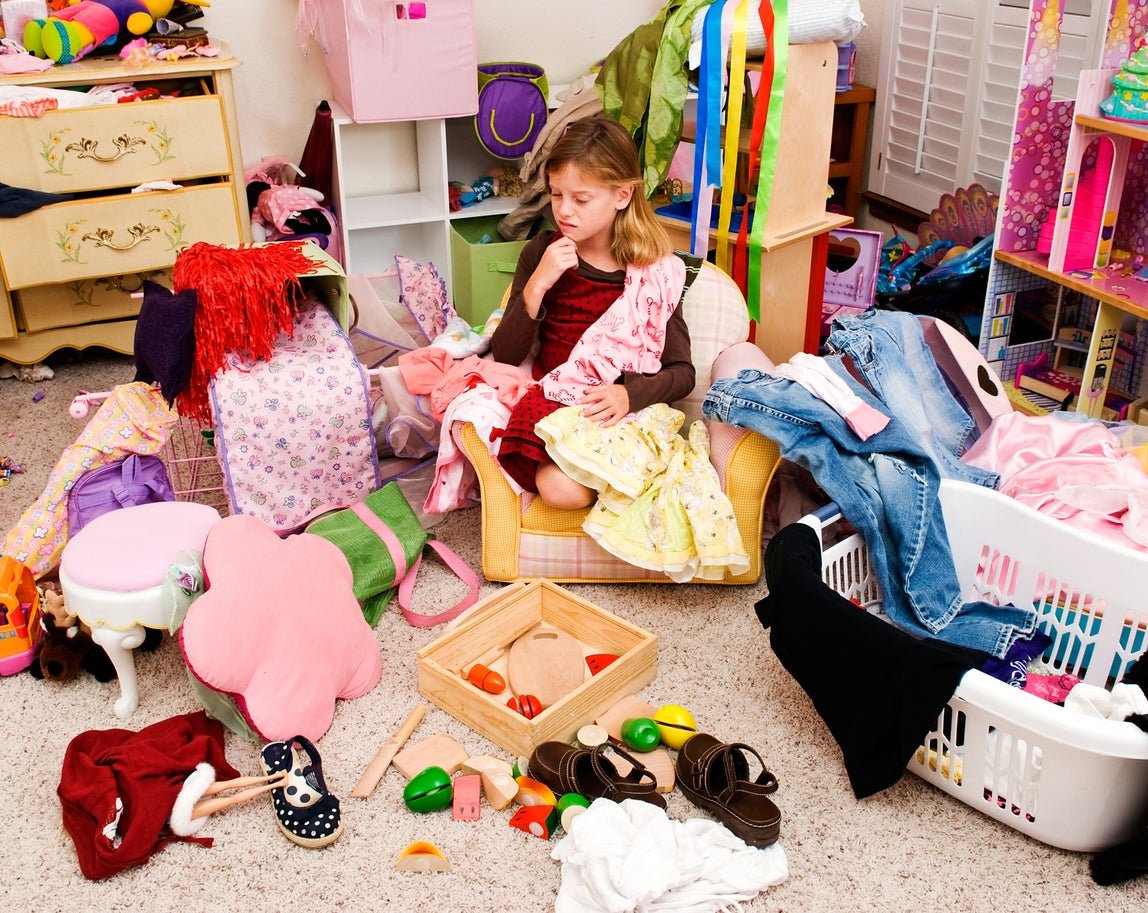
1. Say no to kids
This can be very tricky. As one parent described: “You go to a supermarket and they’re like ‘I want this, I want this’.” Some parents I spoke to prevent impulse purchases in shops by asking their kids to take a photo of what they want to make a wish list for their birthday or Christmas.
This acknowledges the child’s wants. “If they still want the same thing when those events come around, it’s quite a good indicator it’s something they really would like, not some passing phase or interest.”
Parents also manage children’s expectations of how many presents they will receive for Christmas and birthdays by limiting to four gifts. This is based on the saying, “Something you want, something you need, something to wear and something to read.”
2. Gift experiences
Managing gifts from friends and family can be really challenging – especially from grandparents. In a US study in 2019, they were found to spend an average of US$805 each year (£598) on gifts for their grandchildren. In the UK, grandparents intend to spend almost £100 on each of their grandkids at Christmas.
Some minimalist parents try to limit gifts from others by asking for specific items their kids really want, for contributions towards a bigger gift, or for experiences, like a trip to the zoo, bowling or cinema tickets.
Parents also prioritised low-cost experiences over buying things, like playing outside in parks or trips to the local library.
3. Invest in open-ended toys
Kids still need toys and play materials to help their cognitive development and learning. But having fewer toys overall allows children to focus better and play more creatively.
The minimalist parents I spoke to liked to give their children simple open-ended toys. These are toys that can be played with in lots of different ways – such as building blocks, magnetic tiles and play silks – that encourage creative and imaginative play.
4. Put things in their place
Organising children’s toys in a household can still be very challenging. Parents told me how they managed this by giving things designated homes – specific places where each object lives.
One parents explained: “I found that making sure that everything had a home was really the only way that I was able to keep my children organised, keep my life organised.”
Another parent kept all the toys in a storage box: “We have a rule that everything has to fit in there.”
If toys start to overflow, the children have to get rid of something.
One parent mentioned how they were very happy for their kids to keep their things in their rooms how they wanted, but shared family areas like the living room and kitchen had to be kept clutter free.
About the author
Amber Martin-Woodhead is a Senior Research Associate in Design for Sustainability, School of Art and Design at Manchester Metropolitan University. This article was first published by The Conversation and is republished under a Creative Commons licence. Read the original article.
5. Pass it on
When a child has grown out of something, minimalist parents don’t tend to let things sit around unused; items are swiftly sold, donated or passed on to friends and family.
This helps keep their own homes clutter free and has added the sustainability benefit of extending the use of objects to other families. It also prevents recipients from having to buy something new, so less resources are used.
There’s therefore much to be said for taking on some of these minimalist parenting practices of buying kids less new things, opting for local experiences and passing on children’s things when they have outgrown them. It offers personal benefits of spending less and having less clutter – and can be more sustainable along the way.