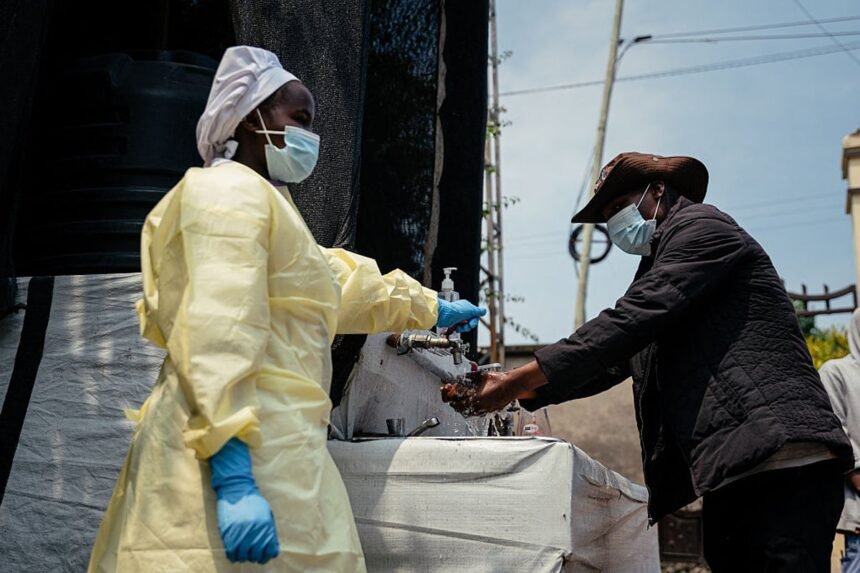
Tensions have recently emerged around the Ebola response in eastern Democratic Republic of the Congo (DRC). These tensions have manifested in a series of incidents, including the burning of an Ebola treatment facility in Mongbwalu, confrontations involving families seeking to reclaim the bodies of relatives who had died from the disease, and reports of police firing warning shots.
Against a backdrop of grief, fear, political mistrust and uncertainty, these incidents highlight difficulties that have shaped infectious disease outbreaks throughout history.
With hundreds of Ebola cases reported in the DRC, and a growing number of cases identified across the border in Uganda, attention has increasingly focused on vaccines. This focus is understandable.
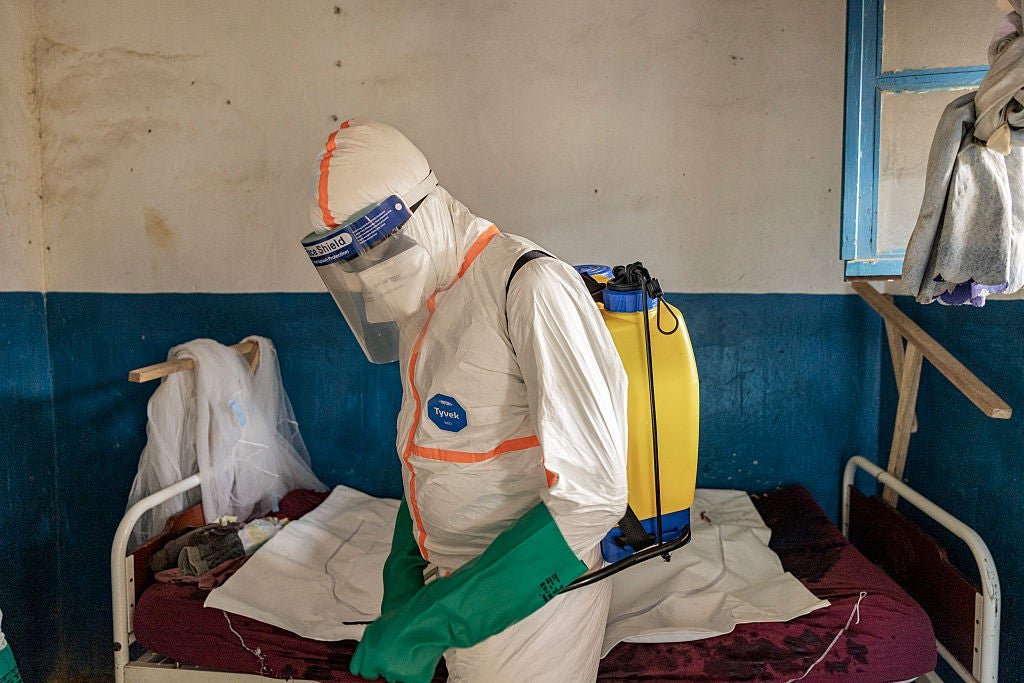
But these events also serve as a reminder that outbreaks are rarely controlled by vaccines alone.
While vaccines play an important role in reducing the spread of disease, infectious disease outbreaks have historically been brought under control through a combination of public health measures, behaviour change and community engagement.
For example, in the case of mpox, changes in the behaviour of those who were susceptible to the disease meant that the outbreak could be brought under control, and when later combined with vaccination, kept under control.
In many outbreaks, it is often these less visible interventions that begin to slow transmission.
In the case of Ebola, this is particularly important because transmission can be closely tied to care itself. Many lessons emerged during the 2014-16 west African Ebola outbreak, including how people cared for one another during illness, how public health interventions interacted with local customs, and the importance of involving trusted local leaders in outbreak response.
Family members may spend days tending to sick relatives, helping them eat and drink, washing them and their clothing, and staying by their side throughout their illness. While these acts of care are often essential, they can also create opportunities for disease transmission when infection control measures are not in place.
However, despite the risks, some families continued to care for their sick relatives at home during the 2014-16 outbreak due to a strong sense of moral responsibility to care for a loved one, which often outweighed the known dangers of Ebola.
Transmission can also happen during funeral and burial practises that involve direct contact with the body. During the west African outbreak, efforts to introduce different burial practises were initially met with resistance, because they prevented families from washing and preparing the bodies of their loved ones, according to local customs. Over time, response teams worked with local communities to develop protocols for safe and dignified burials.
These burials helped to stop the infection from spreading, while also preserving the dignity of the deceased and enabling families and communities to participate in burial practices in culturally appropriate ways.
The outbreak also highlighted the importance of involving trusted local leaders. During the outbreak, many communities were sceptical of messaging coming from government officals and international response teams alike.
In some cases, families were reluctant to report their symptoms or to allow their relatives to be taken to treatment centres over fears they would never return. Others continued to rely on familiar sources of care, such as traditional healers.
However, influential community figures, such as community or religious leaders, helped to communicate how Ebola can spread, provided support to families and encouraged them to report suspected cases.
Applying the lessons to the current outbreak
Recent events in eastern DRC illustrate how quickly relationships can come under strain. Reports of families attempting to reclaim the bodies of relatives from Ebola treatment centres, and the tensions that followed, reflect the difficulty of implementing infection control measures amid grief, fear and uncertainty.
As in west Africa in 2014-16, these disputes sit at the point where public health guidance meets real-world caregiving expectations, mourning practices and the immediate experience of bereavement. In settings where trust in authorities is weak or absent, even effective public health measures – such as safe burial procedures or infection control steps – can be questioned, resisted or refused locally.
About the author
Charlie Firth is a PhD Candidate in Paediatrics at the University of Oxford. This article is republished from The Conversation under a Creative Commons license. Read the original article.
Public health measures rely on widespread participation. Contact tracing depends on people sharing their information. Isolation depends on people feeling supported enough to step away from daily routines. Vaccination depends on confidence in the services delivering it.
Vaccines remain an important part of outbreak preparedness, but like any public health intervention, their success depends on more than how well they work in a clinical trial. Communication, engagement and trust all shape how well they work in practice