Cleaning a swimming pool ranks right up there with scrubbing bathroom floors, but the consequences of neglecting either chore are equally unhealthy. Fortunately, living in the age of robots means you can ditch the laborious chores of manually skimming leaves from your pool’s surface and scrubbing algae from its walls and floors.
Invest in a modern robotic pool cleaner and let that machine do that dirty work for you. (Sadly, we’ve yet to find a robot that can scrub toilets.)
These labor-saving pool bots come in various shapes and sizes with diverse capabilities, not to mention a wide array of prices. The most sophisticated models go for $2,000 or more. Here are our top picks, followed by a buyers’ guide that will help you determine what you need in a robotic pool cleaner.
Polaris Freedom Plus – Best cordless robotic pool cleaner overall
Pros
- Overall great cleaning quality
- Lightweight, drains water quickly
- Docks at waterline for easy retrieval
Cons
- Slightly less effective than Polaris’ corded model VRX iQ+
- Remote control is somewhat difficult to use
- Very expensive
Best Prices Today:

$1,699
Why we like the Polaris Freedom Plus
Polaris’s premiere battery-powered pool robot wins on flexibility, even if it makes minor compromises in cleaning prowess compared to its corded–and much less convenient to use–cousin, the Polaris VRX iQ+ (our pick for the best corded robotic pool cleaner). This bot has a large, easy-to-clean debris basket, and it was extremely effective at removing leaves and other debris from our test swimming pool. When the bot has finished its work, it automatically parks itself at the side of the pool for easy retrieval.
Who should buy the Polaris Freedom Plus
The Polaris Freedom Plus is a great choice for homeowners with larger pools who want hands-off cleaning with the option to remotely control their pool-cleaning bot to ensure specific areas are cleaned. It comes with a caddy that provides contactless charging, and its 20-pound weight makes it easy to move from the caddy to the pool when it’s time to clean.
Read our full
Polaris Freedom Plus review
Beatbot Aquasense Pro – Best cordless robotic pool cleaner, runner-up

Pros
- Excellent underwater cleaning capabilities
- App lets you tweak cleaning operations in dozens of ways
- Outstanding battery life of 7 hours or more
Cons
- Can still get stuck on occasion
- Skimming feature isn’t overly effective
- Expensive compared to some other high-end competitors
Why we like the Beatbot Aquasense Pro
Like many robot vacuums, the Aquasense Pro comes with a docking station that automatically charges its battery, eliminating the need to drag a power cord to the device after each cleaning session. It will clean your pool’s floor, walls, waterline, and the water’s surface. It does a great job vacuuming up dirt and debris from the bottom of the pool, trapping it in its two-piece mesh basket. And if you opt in to purchasing its water-clarifying agent, the robot will dispense it while it moves around sucking in leaves off the surface of the pool.
Who should buy the Beatbot Aquasense Pro?
Pool owners looking for the ultimate in programmability and flexibility in cleaning should take a long look at the Aquasense Pro. This machine is outfitted with nine separate motors, which help it cruise around your pool with focus and efficiency. It has four Four preset cleaning modes: floor only; floor, wall, and waterline; floor, wall, waterline, and surface; and an eco mode that cleans the pool’s floor once every other day until its battery dies. But you can also create custom cleaning modes for the floor, walls, and surface that give your more than 20 other ways to keep your pool spotless.
Read our full
Beatbot Aquasense Pro review
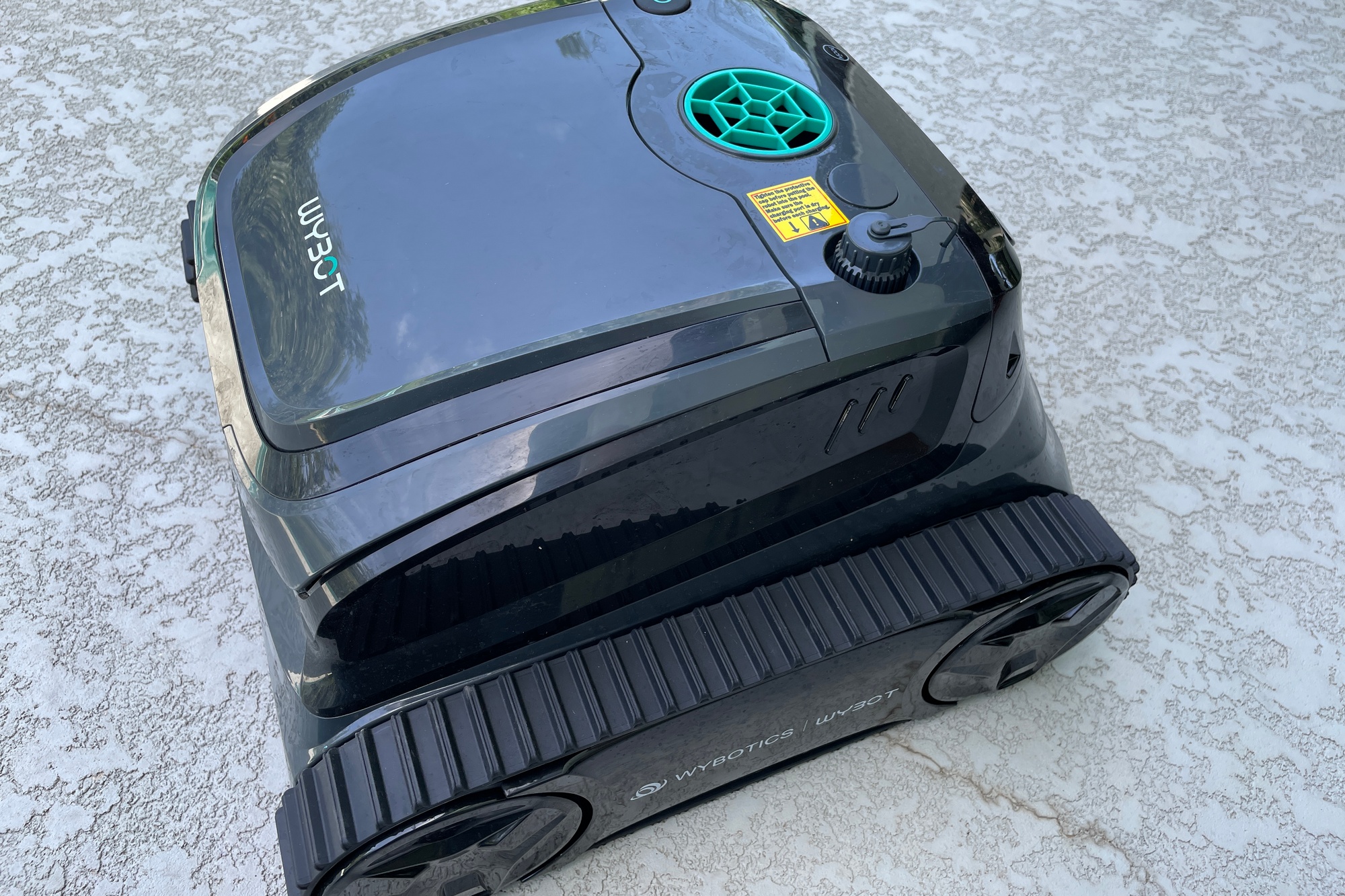
Wybot S2 – Best cordless robotic pool cleaner for large pools
Pros
- Outstanding coverage
- Endlessly configurable via mobile app
- Reasonably lightweight for easy maneuverability
Cons
- Haphazard navigation
- History of cleaning operations seems broken
- App is rough around the edges
Best Prices Today:
$799.99
Why we like the Wybot S2
Boasting the ability to clean swimming pools measuring up to 3,230 square feet and equipped with a beefy 7800mAh battery, the Wybot S2 can scrub nearly any pool in just a few hours. Don’t let its idiosyncratic navigation fool you. It might look like it’s wandering around with no clear purpose, but it will leave no area of your pool’s floor, walls, and waterline untouched. And its ability to suck up debris is as good as its ability to scrub, thanks to a large basket with two filters, the second of which is great for capturing fine-grained grit.
Who should buy the Wybot S2
If you’ve been maintaining a large swimming pool the old fashioned way, you’ll love the labor savings the Wybot S2 will deliver. Its large battery will ensure the pool is always clean and ready for use. Be prepared to endure some quirks in its app–it seems it could have used a wee bit more polishing before it was released–but that software should be relatively easy to update. This robotic pool cleaner is outstanding in every other regard. If price is no object, however, the Polaris Freedom Plus is even better; that said, it’s also nearly twice as expensive.
Read our full
Wybot S2 review
Fanttik Aero X – Best cordless robotic pool cleaner for large pools, runner-up

Pros
- Outstanding cleaning quality
- Epic battery life
- Best-in-class remote control
Cons
- Easily gets stuck on steps
- Both retrieval and cleanup can be tricky
- Snaking cable makes for less tidy storage and appearance
Best Prices Today:
$899.99
Why we like the Fanttik Aero X
The Fanttik Aero X robotic pool cleaner runs fast and runs long: With six hours of running time and top-notch cleaning power, the device makes short work of underwater debris.
Who should buy the Aiper Seagull Pro
This certainly isn’t the least-expensive robotic pool cleaner on the market, but if you’re looking to a large pool and need a bot with long battery life, this is an excellent choice.
Read our full
Fanttik Aero X review
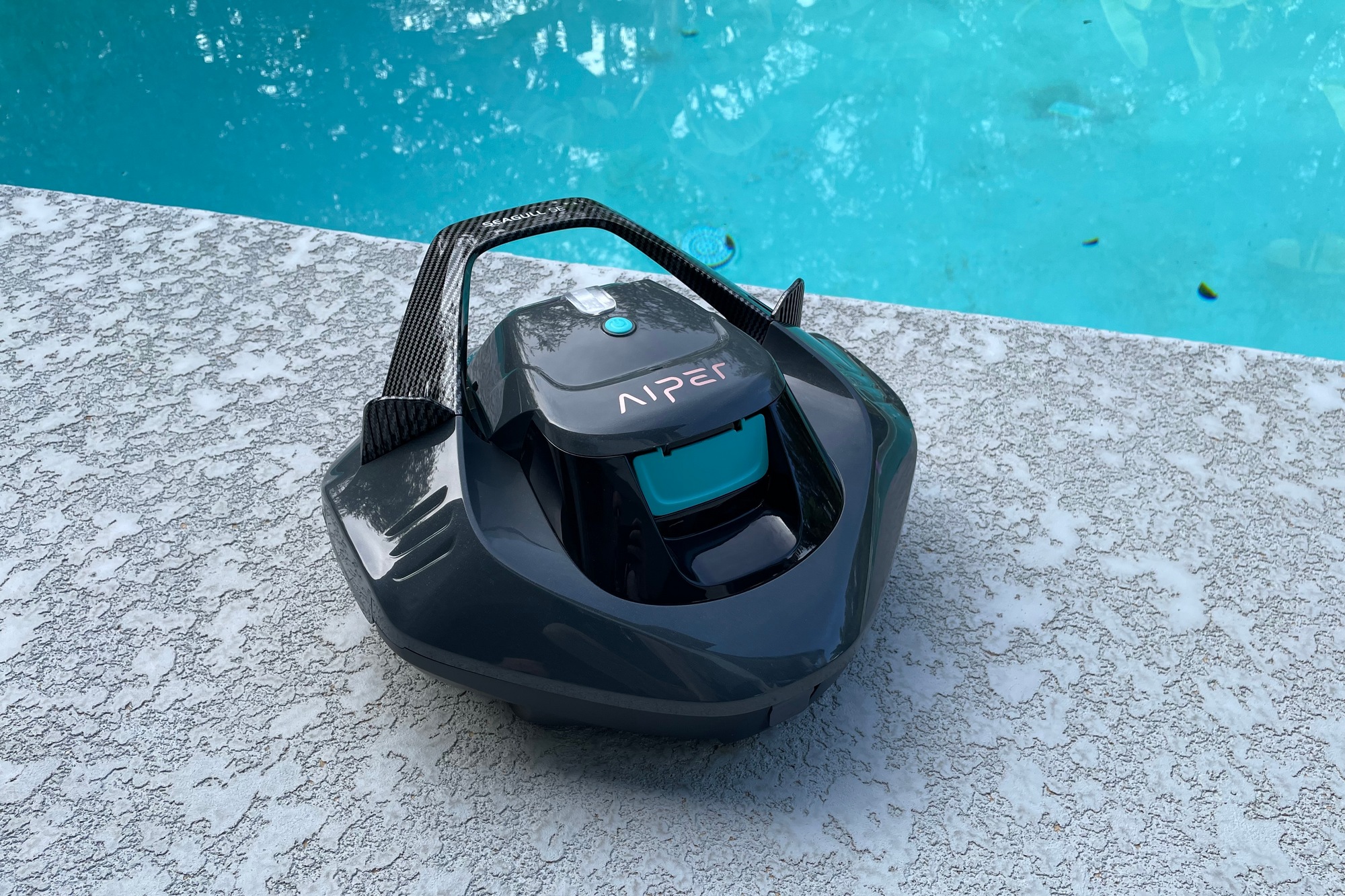
Aiper Seagull SE – Best robotic pool cleaner for smaller pools
Pros
- Very easy to use
- Lightweight, sleek, and fast
- Reasonably effective at cleaning considering the price
Cons
- Failed to park itself near the wall at end of its cycle
- Struggles with larger leaves
- Requires significant regular maintenance
Best Prices Today:
$159.99
Why we like the Aiper Seagull SE
If your pool is on the small side, Aiper’s entry-level pool bot should have no trouble cleaning debris from it. The 8-pound device is easy to maneuver, zooming around the pool for about 90 minutes before its battery dies out. It lacks much in the way of features beyond its on/off switch, but it’s a capable and incredibly low-cost choice if all you need is occasional help scooping up leaves that you’d otherwise have to collect by hand.
Who should buy the Aiper Seagull SE
Aiper’s entry-level pool bot is best for people with smaller swimming pools—up to about 850 square feet. If you’re working with a tight budget, you could try deploying one in a larger pool, but be aware that its battery will need multiple charging cycles to get the entire job done.
Read our full
Aiper Seagull SE review
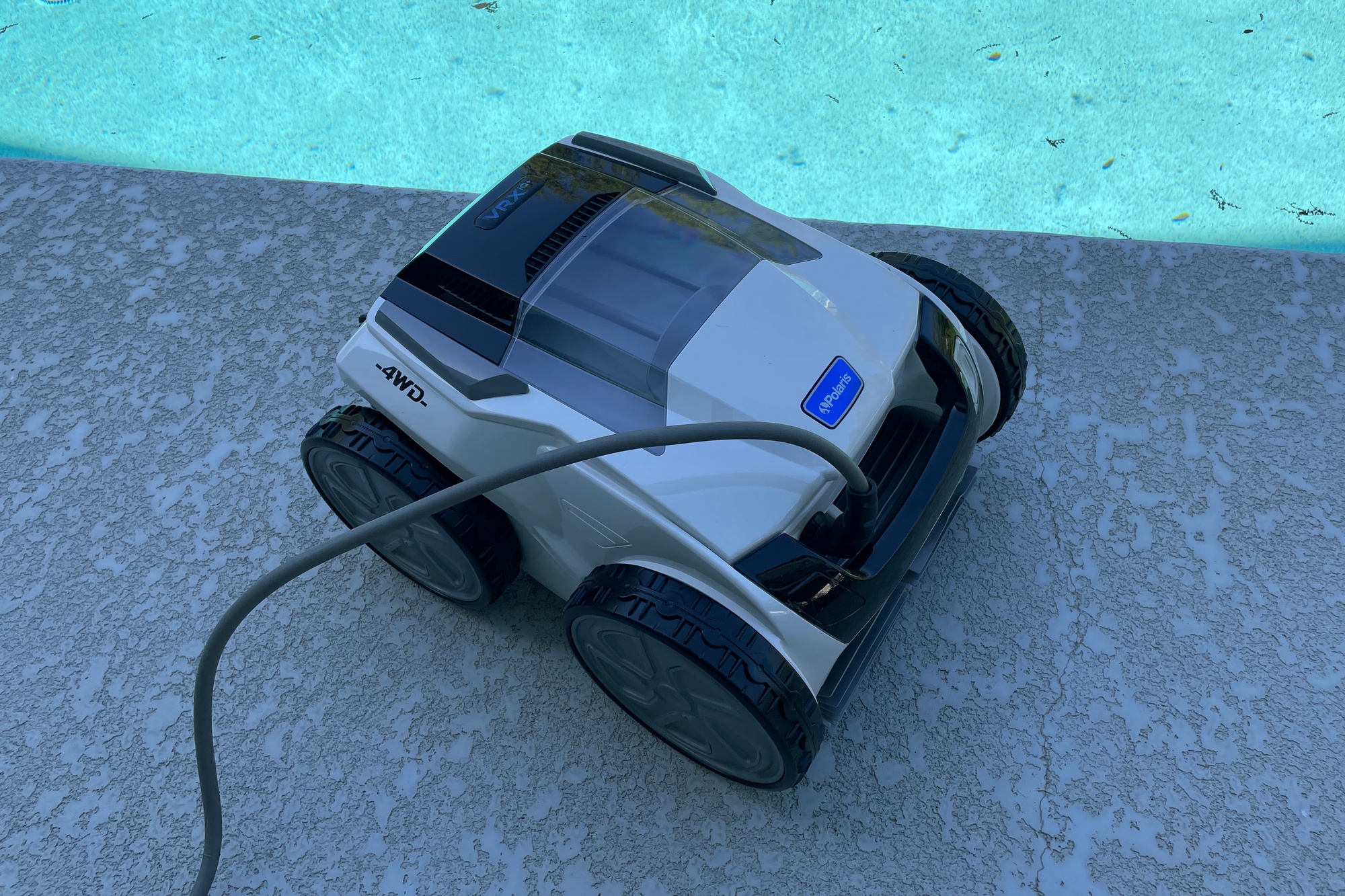
Polaris VRX iQ+ – Best corded robotic pool cleaner
Pros
- Best performance of any pool cleaning robot we’ve tested to date
- Optimizes run time based on pool size
- Lift system lets you retrieve the robot on demand without a pole
Cons
- Very expensive
- Wrangling power cable requires some extra effort
- A bit of an eyesore even when not in use
Best Prices Today:
$1,649
Why we like the Polaris VRX iQ+
The Polaris VRX iQ+ differs from the other robotic pool cleaners we’ve tested by virtue of the 70-foot insulated power cord that connects it to its out-of-the-water control panel. Wrangling the cord can be a chore–and it’s not the least bit attractive whether the robot is in use or not–but this bot cleaned our pool better than anything we’ve tested to date.
Who should buy the Polaris VRX iQ+
If you’re looking for the most effective robotic pool cleaner, you have a place to stash it and its bulky caddy when it’s not in use, and you don’t mind wrestling with its power cord each time you set it to cleaning–and again when it’s done its job–the Polaris VRX iQ+ is hard to beat. If those chores are a turn-off, pick one of our battery-powered recommendations instead.
Read our full
Polaris VRX iQ+ review
Wybot F1 Pool Skimmer: Best robotic pool skimmer

Pros
- The overall best skimmer at capturing debris in our tests
- Huge filter basket
- Remote control allows for manual steering when needed
Cons
- Extremely loud
- Blunt operation; runs into the wall Constantly
- Weak battery life
Wybot’s solar-powered skimmer does a surprisingly good job of grabbing leaves off the surface of the pool, but its loud operation and poor power management knock it down a peg.
Read our full
Wybot F1 Pool Skimmer review
Other robotic pool cleaners we’ve tested
We’ve evaluated many other robot pool cleaners, but apart from the Ofuzzi Cyber 1200 Pro, it’s been a love or hate relationship to date. If none of our top picks check all the boxes for you, take a look at these other products. Perhaps you’ll find a redeeming factor we’ve overlooked.
- Aiper Scuba S1: As much as we like Aiper’s higher-end pool-cleaning robots, we were disappointed with the performance of its budget-priced entry.
- Airrobo PC10: Price is the this robotic pool cleaner’s primary attraction. It’s certainly not the most powerful bot we’ve dropped in the pool, but it is one of more affordable mid-range models.
- Dreame Z1 Pro: It took a few firmware updates for us to be mostly satisfied with this pool cleaner, which is more intelligent than most.
- Hydrus Roker Plus: Don’t be tempted by this robot pool cleaner’s low price tag. We found it did a poor job of cleaning our pool, its battery life too short, and it was difficult to clean of the debris it did pick up.
- Inse Y10 Pool Vacuum Robot: The manufacturer says its smallish robot is designed for moderately sized pools up to 1,100 square feet. It’s one of the least-expensive bots we’ve tested, but there’s a big difference between inexpensive and just cheap.
- Ofuzzi Cyber 1200 Pro: This robot won’t clean your pool’s walls, but we found that it did a great job vacuuming up leaves and other debris from the bottom of our pool. It’s attractively priced, too.
- Seauto Shark: This robotic pool cleaner excels at picking up dirt and grime from the bottom of the pool, but in our test runs, it tended to miss key sections.
How I test pool cleaners
I test robotic pool cleaners in two ways: First, I start with real-world tests by letting debris build up for a few days, I then drop the robot into the water to see how it fares. This isn’t scientific—and it’s seasonally dependent on falling leaves—so I also devised a synthetic test using about 100 craft leaves made from silk. These I scatter across the pool before initiating a standard cleaning run. Measuring the portion of leaves left behind makes it easy to make an apples-to-apples comparison among various robots’ cleaning capabilities.
TechHive has not tested any robot pool cleaners in an above-ground pool.
Why you should trust me
I’ve been in and around home swimming pools for most of my life, and I have owned my own pool since 2022. The pool is actively used, and I perform some level of maintenance on the pool nearly every day. I have tested a variety of cleaning devices in the pool, including old-school water-powered Polaris cleaners and a number of more modern robots. The pool depth ranges from about 4 to 7 feet deep and is L-shaped, measuring 12 by 36 feet, with a small leg jutting out that adds another 6 by 6 feet in the shallow end, totaling 468 square feet.
Who curated this article?
Christopher Null is an award-winning technology journalist with more than 25 years of experience writing about and reviewing consumer and business tech products. In addition to his work for PCWorld, he is a frequent contributor to Wired, This Old House, and AAA’s Via Magazine.
How to choose a robotic pool cleaner
As with most tech products, the feature sets and capabilities of pool-cleaning robots advance as their price tags go up. Here’s a partial list of features that you should look for, sorted from the most common—and therefore should be present on even the least-expensive models—to the fancier features you’ll find on the more sophisticated, and pricier, models.
These specs go hand in hand: The larger the battery, the more area the robot should be able to cover. In my experience, most manufacturers exaggerate how many square feet their bots can cover on a single battery charge. Look for a model that promises coverage of at least twice the size of your pool’s square footage.
Mobile app support
Starting at about the $1,000 price range, robotic pool cleaners start to include Wi-Fi connectivity and mobile app support. These features lets you monitor battery life and the robot’s cleaning mode, and—at least in theory—map your pool visually. These features don’t always work as planned, but it can be helpful to get a push notification on your smartphone if the robot gets stuck somewhere.
Remote control
A few robots include a standalone remote control that let you “drive” the robot toward debris or tell it to abort its cleaning run altogether.
Self-parking
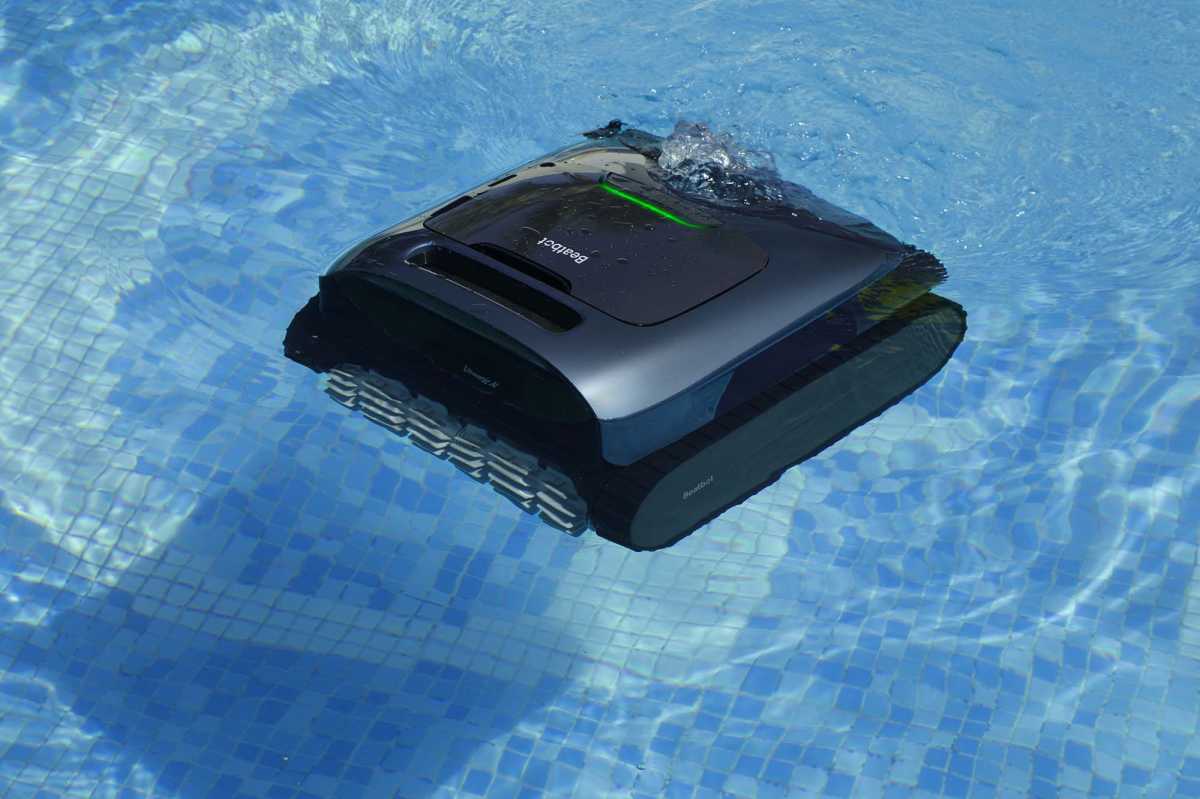
Many robots can park themselves near a wall at the bottom of the pool when they’re finished running, which makes them easier to retrieve with a pole (a hook attachment is always included). I’ve found this feature to be hit-or-miss affair with the inexpensive models, while the more advanced ones can rise to the surface of the pool and float there. At that point, you can simply pull them out of the water by hand, no tools needed.
Surface-cleaning capabilities
Beatbot
Want a robot that can skim leaves that haven’t yet sunk to the floor? Look for a model with a skimming feature–although note that these won’t provide perfect coverage due to the tendency of leaves to migrate while the robot is in motion.
Wall-cleaning capabilities
Christopher Null/Foundry
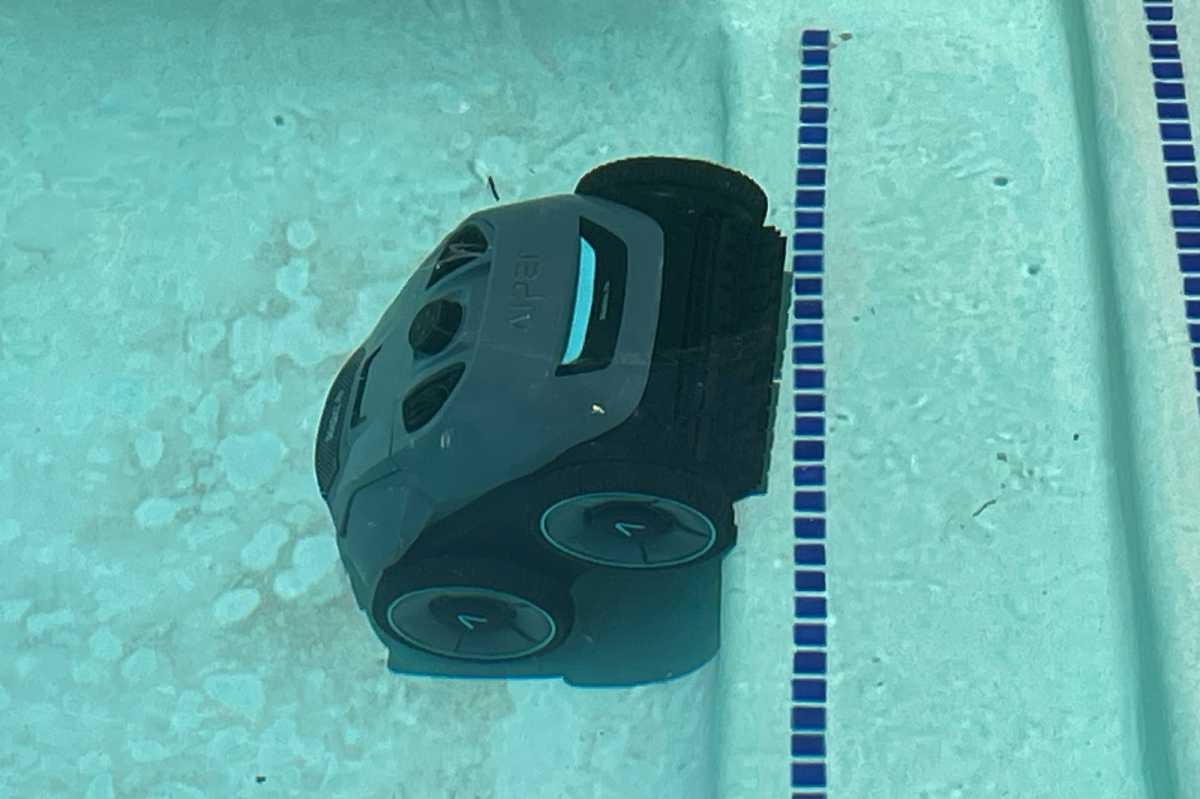
I didn’t think I needed this feature until I tried it out: Who gets debris on the walls of the pool? Well, you do, more than likely. Wall-cleaning robots can physically scrub off algae that you’d otherwise need to do manually, with a brush—an that’s a terribly painful, back-breaking task. The best models use spinning treads, while cheaper robots rely on just suction power.
Frequently asked questions about robotic pool cleaners
What is the best robotic pool cleaner?
The Polaris VRX iQ+ is most reliable and effective pool cleaner we’ve tested to date. It’s speedy, thorough, and easy to use. Its reliability is due in large part to it being corded, and thus free from the limitations of a battery. The best cordless robotic pool cleaner is the Polaris Freedom Plus. It’s slightly less effective than its VRX iQ sibling at cleaning, but still does an admirable job, is packed with features, and eliminates having to wrestle with an unwieldy and unsightly power cord.
How do robotic pool cleaners work?
Robotic pool cleaners are in many ways the watery analogue of robot vacuum cleaners, although their navigational technologies vary considerably. Simple cleaners will use water jets to move back and forth in wide arcs, reversing each time they hit an obstacle while sucking up debris through a small port in the bottom of the robot.
More advanced cleaners have multiple mechanical motors and sensors that take the robot through a more ordered cleaning routine, moving back and forth across the pool like a person behind a lawnmower. Models that can clean the sides of a pool can climb its walls in the same type of pattern. The spinning brushes on these models are more effective at scooping up sand, dirt, and other fine debris.
How do you control a robotic pool cleaner?
For the most part, you don’t. Robot pool cleaners are a “set and forget” affair, though more luxe models can be set to clean the floor only, walls only, both floor and walls, and so on. If you want to stop the robot mid-run, you can grab it with a hooked pole and turn it off manually or with a remote control if one was provided.
Note that mobile apps usually won’t work while the robot is in the pool, as the water and concrete tend to block the wireless signal.
How effective are robotic pool cleaners?
If you’re used to having something like an old-school Polaris cleaner run for 8 hours a day to keep your pool spotless, you might be disappointed in what a robot pool cleaner—which will generally run for less than 3 hours, and sometimes much less—can do. I’ve never completed a cleaning run with absolutely no debris left behind, but the models reviewed above do a solid job, sucking up 80 to 95 percent of debris, depending on how dirty things are when you started.
More advanced robotic pool cleaners, machines outfitted with treads, do a remarkably good job cleaning up fine debris and algae—much better than hose-type cleaners that need to be pulled out of the pool when you want to swim—and are nearly as good as a human with a brush. This capability alone makes it worth considering a more advanced—and more expensive—unit.
What kind of maintenance do robotic pool cleaners require?
Very little. Robotic pool cleaners need to have their debris baskets cleaned out after each run—you might need to use a brush to clean the filter screen—and you should dry them off, though most are very good at draining within a few minutes of removal from the pool. After a few hours of recharging, the robot should be ready to run again.
Pool robots are electronic devices, so they are prone to breaking down over time—especially given that they will spend ample time underwater. Never leave a robot in the water for longer than its running cycle, and always store it out of direct sunlight, so UV rays don’t break down its plastic components. Naturally, batteries will lose capacity over time, and these are not user-replaceable on any robot I’ve seen.
Are there robotic pool cleaners for above-ground pools?
Virtually every robotic pool cleaner can clean in-ground pools, but many models can also clean above-ground pools, which have different types of surface materials and often lack a smooth floor for the bot to traverse.
Some pool-cleaning robots can handle both types of pools, but don’t assume the one you’re considering can. The manufacturer’s product specifications should indicate which type(s) of pool the robot is designed to clean.