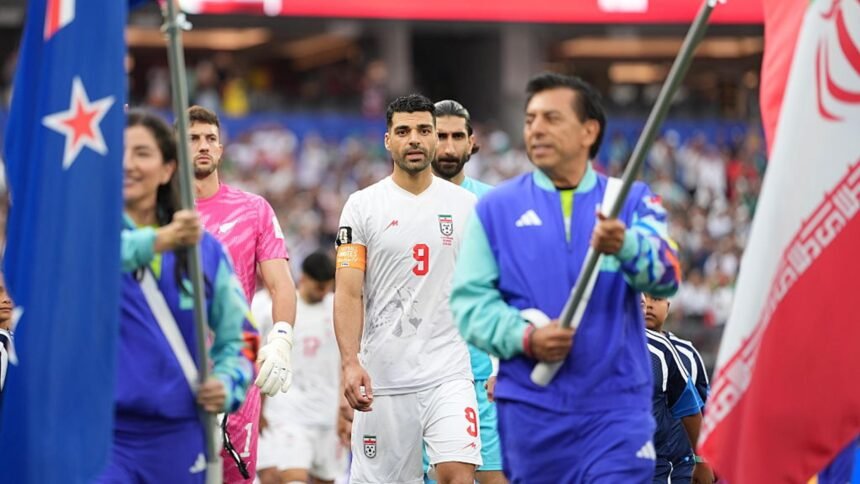
“This is not the national team of Iran,” says Satggin Jalali, an Iranian activist living in Los Angeles. “This team does not represent Iran and the Iranian people. They represent the terrorist regime,” Jalali, 47, never considered buying a ticket to support the team. “I don’t want to be there,” she says.
The second camp was more conflicted. “It’s a mixed emotion,” says Salar Deldar, a physician from Carmel, Calif., who was attending the game with his mother and young son. Deldar, 42, was born in Iran but immigrated to the U.S. when he was 2, during the Iran-Iraq War of the 1980s. “There’s a lot going on, internally, so it’s challenging,” he says. “I try not to make it ultrapolitical, and kind of just see it through the lens of the sport. To appreciate the game for what it is.”
Another group isn’t torn at all about cheering. “The national team feels like my family, and I support them regardless of what is happening,” says Anahita Seyed, an architect from the Bay Area who was born and raised in Iran and moved to the U.S. some 15 years ago. “My love for Iran is very strong. It’s actually been growing stronger because I feel my country has been going through a lot the last year, from different sides.”