I grew up scared of everything: death, the dark, my own face in the bathroom mirror.
Eventually, I learned my bottomless fear belied several anxiety and anxiety-adjacent disorders that I’ve been addressing in adulthood with the help of therapy, medication, and an unlikely third salve: ravenous horror-film consumption.
Contagion got me through the first night of lockdown in 2020, and Daddy’s Head helped me unleash pent-up tears around the anniversary of my dad’s death. I felt my own unspeakable rage and grief mingle with the Graham family’s around the dinner table in Hereditary, and my hopelessness and meanness during a particularly bad period transmute into senseless murder across a breathtaking stretch of the Australian outback in Wolf Creek.
Though this kind of catharsis is counterintuitive, I’m far from the only one who relies on it.
Dark copers, as researchers have dubbed us, use “horror as an instrument with which to navigate a world that they perceive to be scary,” says Mathias Clasen, co-founder of the Recreational Fear Lab at Aarhus University in Denmark. And we derive great enjoyment, self-discovery, and personal growth from this pursuit, according to the lab’s findings.
Contrary to conventional wisdom, their research shows that seeking out scares for sport—watching a horror film or visiting a haunted house, for example—is linked to greater resilience among adults and, when age-appropriate, a lower risk for childhood anxiety.
As humans, “we’re constantly forecasting,” Clasen says. “In a sense, horror is just like a formalized worst-case scenario that’s a very natural product of the way we cope.”
Why we seek out scares
Aside from the “dark coper” archetype coined by the lab, two other major categories identified through earlier research are “adrenaline junkies,” who are most motivated by the physiological arousal—the rush—they experience from a fun-scary activity and the subsequent mood boost, Clasen explains, and “white knucklers,” who muscle through not for the sensation during, but for the sense of accomplishment afterward.
Regardless of the motivation, “at the very core of recreational fear lies learning,” says Marc Malmdorf Andersen, the other co-founder of the Recreational Fear Lab. It’s an opportunity for people to engage with the fear part of our human “emotional palette” that many of us don’t experience in daily modern life. “By familiarizing yourself with those states, we believe that they essentially become more predictable” and less overwhelming, Andersen explains.
Read More: The Worst Things to Say to Someone With Anxiety—And What to Say Instead
For people like me, turning to horror to quell anxiety may train our brains to better predict fear signals and suppress overwhelming physiological ones, says Andersen. Because anxiety can cause someone to overestimate a threat, or underestimate their ability to cope, watching horror films might help reset “the comparison that would say, ‘this is the worst,’” says Greg Siegle, a cognitive neuroscientist at the University of Pittsburgh.
Separating fact from fiction
Despite its restorative effect on people like me, horror has a reputation for the opposite. Much of the concern around the impact of recreational fear-seeking—that it’ll traumatize or corrupt—amounts to little more than “folk belief” stemming from “a very long cultural history of being deeply suspicious of frightening mass-oriented entertainment” that then worked its way into early studies on the psychology of horror, says Clasen.
Victorian England, for example, saw much handwringing over “penny dreadfuls,” serially published sensationalist crime or horror stories. “In the minds of the concerned intellectuals,” the fans of such tales, who were often from the working classes, “would become criminals and sadistic and whatnot from reading these gory, blood-dripping stories,” Clasen says. Instead, they boosted literacy rates.
Similar moral panics flared in the U.S. in the 1950s, when comics, especially horror and crime varieties, were widely smeared for supposedly turning kids toward delinquency or homosexuality (then viewed as a mental disorder), and in the U.K. in the 1980s over “video nasties,” horror movies banned out of fear that they’d drive young people to violence.
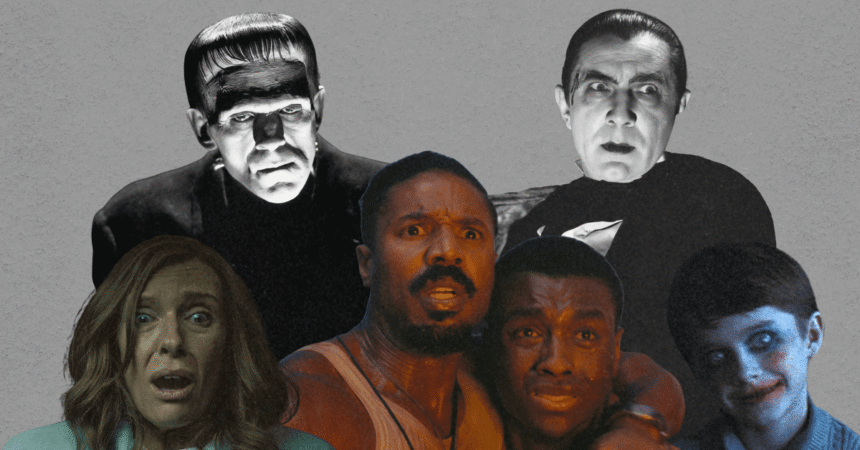
In contrast to these baseless panics, horror can be a barometer of collective suffering—and a tool for processing it, says Adam Lowenstein, founding director of the University of Pittsburgh’s Horror Studies Center, which opened in September. “Some of our greatest waves of horror films have coincided with some of our most traumatic historical moments,” he explains, pointing to the classic monster movies that emerged during the Great Depression: Frankenstein (1931), Dracula (1931), The Mummy (1932), and The Wolf Man (1941). With this year’s commercial hits like Sinners and Weapons, he says we’re in another “horror renaissance.”
Isn’t scary stuff traumatizing?
Clinically speaking, “fear” and “trauma” are distinct, says Siegle. The latter has a significant effect on someone’s long-term functioning and is a rare outcome from recreational fear. He cites a study he conducted with colleague and sociologist Margee Kerr that measured people’s brainwaves and reported emotions before and after going through a “fairly extreme” haunted house. “What they overwhelmingly said was that they liked it,” he says. “It was scary, to be sure, but it was exhilarating and positive and happy for them.”
Of course, people who voluntarily go through a haunted house are a self-selecting group, and trauma can occur when someone is subjected to something against their will or pushed past a limit. It’s why context and consent are an important part of a recreational fear experience, says Kerr, who also helps design haunted attractions. “You are agreeing to suspend your disbelief and enter into a new world but [know] in the background that you always have the ability to leave,” she says.
Staying in the scary sweet spot
To reap the most enjoyment from a frightening pursuit, it’s important to hit the “sweet spot” between too much and too little fear, according to the lab’s research. Storytelling can help.
If you’re in a haunted house, your brain may register that your palms are sweaty, your heart rate is high, and your breath is fast and shallow. The story you tell yourself in that moment plays a big part in determining whether you hightail it out of there—or venture to the next room to see what’s in store, says Siegle.
Read More: 7 Ways to Soothe Your Nighttime Anxiety
“We get our physiology, we get our basic reactions, and then the rest is our story, and what we do to interpret and use our reactions to this emotional information,” he explains. If you want to get the most out of scaring yourself, like I do, Siegle suggests telling yourself that you’re scared but excited and want to challenge yourself—and you’re not going to die from that jump scare. With the right narrative, turning toward the fear can help you “understand your own distress reaction,” he says, “and where you’re actually safer than you might have anticipated.”