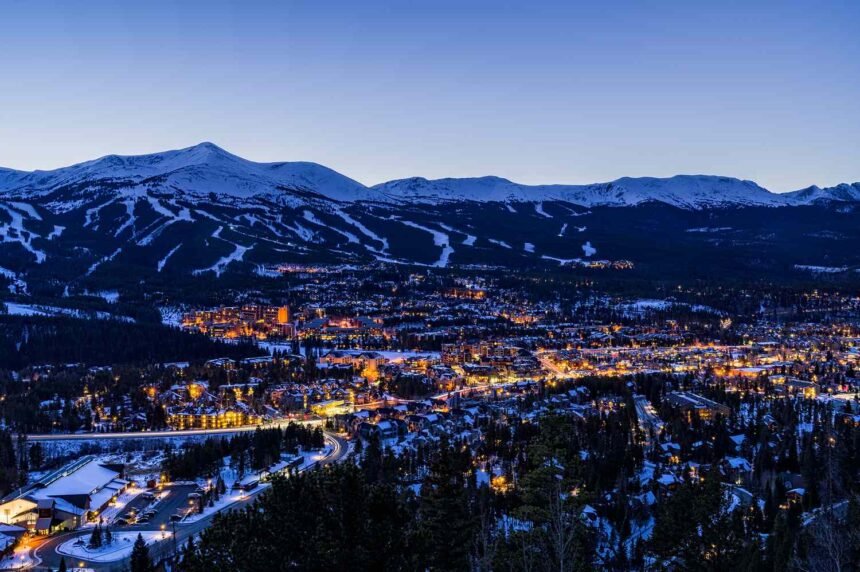
The popular ski town of Breckenridge, Colorado, just became the first mountain ski resort community in the state to become dark sky certified.
The designation, which was bestowed by DarkSky International in July 2025, was awarded due to the town’s efforts to protect “its exceptional alpine nightscape and natural environment for current and future generations.” The certification followed years of work, including adopting a strict exterior lighting ordinance, replacing outdated street lamps, and requiring new construction to comply with dark sky standards.
“The Rocky Mountain towns of Colorado offer immense natural beauty, especially when it comes to the night sky,” Michael Rymer, the communities program manager with DarkSky International (and a Colorado resident), said in a statement. “With Breckenridge’s work as an International Dark Sky Community, the town hopes to protect and preserve the night sky for residents and visitors, now and into the future. We at DarkSky International are excited to certify a significant tourist destination that will highlight the wonders of dark skies to visitors from all around the world.”
Breckenridge is home to the popular Breckenridge Ski Resort and sits at a base altitude of 9,600 feet. The area boasts more than 5,000 acres of open space and 65 miles of trails, according to DarkSky International, drawing outdoor adventurers and travelers looking for beautiful vistas and a slower pace. Beyond skiing, popular activities include snowshoeing in the winter or mountain biking and alpine slides in the summer.
Kelly Owens, the mayor of Breckenridge, said in the statement “the certification not only honors our long-standing commitment to environmental stewardship, but it sets the Town up for a more sustainable and economically resilient future.”
Owens added: “Stargazing, education, and responsible tourism are now part of what makes Breckenridge shine—under the stars.”
Breckenridge is not alone. Communities across the world have started recognizing how the glow of artificial light disrupts not only our view of the cosmos but also the plants, animals, and ecosystems that have long relied on Earth’s natural rhythm of day and night. In 2001, Flagstaff, Arizona, became the world’s first international dark sky city. Since then, the movement has grown to more than 200 places certified in more than 20 countries on six different continents with even airports joining in.
In addition to its new dark sky designation, Breckenridge was recognized as having one of the top 100 green stories in the world last year by Green Destinations International.