Social anxiety can make any gathering feel daunting. Long before someone steps foot in a crowded party, the restaurant where they’re having a first date, or the conference room where they’re giving a speech, they’ll start replaying worst-case scenarios.
“There’s a lot of anticipation and anxiety leading up to the event,” says Charissa Chamorro, a clinical psychologist at the Icahn School of Medicine at Mount Sinai, where she co-directs the anxiety, OCD, and tics fellowship. “The person may ruminate and think over and over again about the situation, and that’s where some of these self-critical thoughts come in: ‘I’m not going to know what to say, I’m not going to know how to act, I’m not going to know what to do with my hands.’”
Once the social situation arrives—whether that means they’re surrounded by two or two dozen people—they’ll feel like there’s an “intense microscope or spotlight on them,” Chamorro says. “People often report feeling almost transparent.”
Physical symptoms can include a racing heartbeat, stomach pain, sweaty palms, and a flushed face. Mental ones include what Chamorro calls the “hallmark” of social anxiety: an intense fear of being judged. That’s where the unhelpful comments tend to come in. It might sound innocent to tell a socially anxious person “you’re overreacting” or “no one’s judging you,” Chamorro says, “but it contradicts the person’s experience and implies they’re being irrational. That person’s experience is already filled with hyper-awareness and the perception of being scrutinized, so it’s reinforcing their experience of, ‘Something is really wrong with me.’” That can backfire, leading a person to avoid social situations even more.
We asked Chamorro and other experts to share the worst things to say to someone with social anxiety—plus, what’s actually helpful.
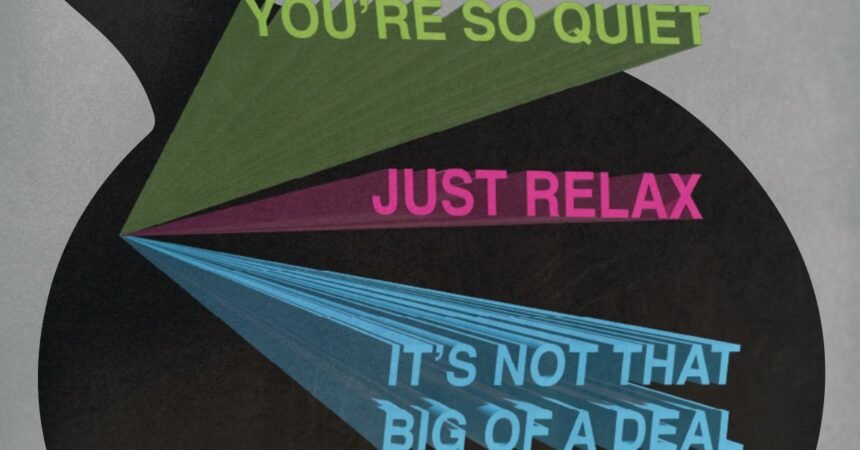
“Just relax.”
A comment like this minimizes and invalidates what they’re experiencing. You might as well tell your friend “it’s not that bad, it’s not that serious, and you shouldn’t feel that way,” says Whitney McSparran, a licensed professional counselor with Thriveworks, which provides therapy and psychiatry services. “There’s an element of judgment that’s being communicated—and when that’s coming from your support person, you’re going to internalize it even more.”
Read More: The Worst Things to Say to Someone With Anxiety—And What to Say Instead
People with social anxiety can’t just turn their fears on and off, which is why it’s not helpful to instruct them to stop worrying. “If it was that easy, people like me wouldn’t have jobs,” McSparran says. “No one is choosing this. No one is saying, ‘I would love to feel horrible today.’ If they could make the decision to relax, they would do that.”
“It’s not that big of a deal—it’s just a party.”
Sounds breezy, but you’re really sending a message that says: “Everybody else can do this but you. You’re the problem.”
“It’s about the subtext of what’s being communicated,” McSparran says. Plus, it will make your friend feel like you’re not interested in understanding them or serving as a support system.
Instead of hyping them up in a way that sounds fake—“I think you’re great with people!”—or pretending everything is fine, meet your socially anxious friend where they’re at by validating and supporting their concerns. For example, it can be helpful to say: “I get it. It might be easy for some people, but for you, it’s torture,” suggests Dr. Sharon Batista, a psychiatrist in New York. If you’re going to an event together, reassure them: “I’ll be there to back you up,” or “You’re going to feel like a million bucks after you’ve done this.”
“If the person does the thing they’re afraid of—and competently—they’re going to feel awesome,” Batista says. Make it a point to congratulate them and let them know you’re proud of them for stepping outside their comfort zone.
“You’re so quiet!”
Applying labels like this, or prodding your friend to “just speak up,” will likely backfire. So will asking them why they don’t talk more.
“The person you’re saying that to is aware they’re quiet,” McSparran says. “They’re probably desperately hoping they’re doing a good enough job masking it for no one else to mention it. So essentially you’re saying, ‘Not only is your struggle obvious, but I have thoughts about it.’ There’s so much judgment there.”
When Chamorro works with people who have social anxiety, she reminds them that the goal isn’t to change their personality. “You can be introverted and really prize your time alone and still have meaningful social connections,” she says. “Something that can be more helpful is, ‘I know it can be hard to find the words sometimes, but you don’t have to talk. It’s great just having you here.’”
“Just be yourself.”
It seems innocuous—and even complimentary, right? But this kind of comment often stings. “It can be really challenging for a person to hear,” Chamorro says. “While it’s meant to be reassuring, it can be confusing, but also really frightening for someone with social anxiety.” That’s because one of their core fears is being judged exactly for being themselves, so being authentic doesn’t feel safe the way it might for someone else, she says.
Read More: 8 Symptoms Doctors Often Dismiss As Anxiety
Instead, focus on providing direct, specific feedback about what you appreciate about your friend—and doing it in real time, as those traits are shining. For example: “I think you’re really funny. I love your sense of humor.”
“I work with lots of people with social anxiety, and they’re often very conscientious and thoughtful and smart and funny,” Chamorro says. “That’s the feedback that people need—specific feedback about what they have to offer.”
“You just need a little liquid courage!”
People with social anxiety hear it all the time—often as their friend tries to shove a drink into their hand or lead them to the bar. “There’s this narrative that if you’re anxious, you just need to loosen up,” McSparran says. “You just need to shut your brain down a little.” Yet alcohol doesn’t reduce anxiety for everyone and could have the opposite effect.
Plus, “if you drink and feel more relaxed, then it creates this loop: ‘Oh, I need to drink—this is how I can be social. This is how it can be fun.’” That, McSparran says, can lead to potentially dangerous, maladaptive patterns of behavior.
What to say instead
It’s better to prioritize showing understanding and acceptance. When your friend is anxious, tell them you get it, McSparran suggests, and that you’re going to stick by their side. If you’re going to a party, brainstorm a plan ahead of time: “If you need a break or to leave, just text me and we can take a breather.”
Showing acceptance is essential. What you want to get across, she says, is this: “I’m not asking you to change it, I’m not judging you for it, and I’m not telling you that you need to go fix it. I’m just saying, ‘OK, you’re my friend and this is what you’re feeling, so I’m here to support you.’”
Read More: The Worst Thing to Say to Someone Who’s Depressed
That includes always celebrating effort, even if there are hiccups along the way. “If you have somebody important in your life and they’re dealing with social anxiety, and they’re trying to get out there, acknowledge that,” McSparran says. “Say, ‘Hey, thank you so much for coming to this with me. I know it wasn’t easy, and I really appreciate it.’”
Wondering what to say in a tricky social situation? Email timetotalk@time.com