- The longest flight in the world is 18 hours and 45 minutes long and connects New York City’s John F. Kennedy International Airport (JFK) to Singapore Changi International Airport (SIN).
- For the flight attendants who work this ultra-long-haul route, the work presents unique challenges—as well as unique ways to connect with passengers.
- To thrive during the extended time in the air, flight attendants have come up with interesting ways to make their work more enjoyable.
There are long-haul flights, and then there are ultra-long-haul flights, a completely different beast altogether.
Currently, the longest nonstop flight in the world clocks in at 18 hours and 45 minutes, connecting New York City’s John F. Kennedy International Airport (JFK) to Singapore Changi International Airport (SIN). For most passengers, that’s a test of endurance. For flight attendants, it’s just another day at the office—albeit one that happens to be 38,000 feet in the air.
We spoke with Madeline Khaw, a leading flight attendant at Singapore Airlines who regularly flies this marathon route, to get her perspective on what it’s like to work the world’s longest flight and her tips for making ultra-long-haul flights more comfortable.
What It’s Like to Work the Longest Flight in the World
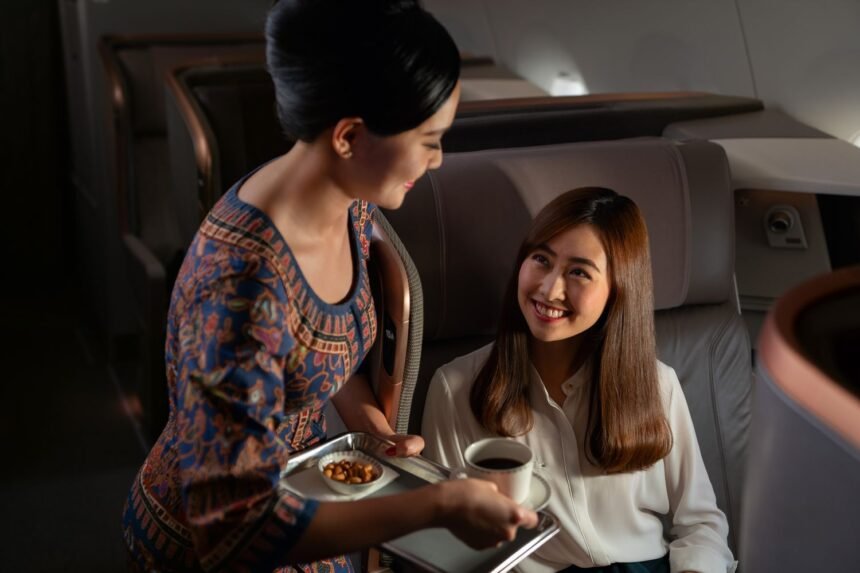
Singapore Airlines
For most people, the idea of being a flight attendant might bring to mind images of glamorous travel to far-off destinations—but Khaw says that there’s much more to being a flight attendant. For example, the logistics alone on this route are staggering. Since the flight is 18 hours long, the crew operates in carefully planned shifts.
“The crew is divided into designated rest periods in the crew bunks,” Khaw says. “It’s critical to ensure that all crew members get adequate rest, so they’re alert and able to provide consistent service and deliver the required safety standards throughout the journey.”
Plus, sleeping at 38,000 feet presents its own challenges. Khaw says that designated rest areas are available to help the crew recharge, but sometimes it can be tricky to sleep on board because of turbulence or cabin noise.
The toll on crew members goes far beyond simply being tired. Readjusting to time zones that are 12 to 15 hours apart wreaks havoc on sleep patterns and overall well-being.
“Operating long-haul flights does come with its own set of challenges, with fatigue being one of the most noticeable long-term effects,” Khaw says. “Over time, it may contribute to things like persistent tiredness and occasional breakouts.”
This reality has forced Khaw to become proactive about self-care.
“Facial masks have become a must in my skincare routine, especially hydrating ones, to combat the effects of drier cabin air and jet lag,” she says.
The long flight time also creates unique team dynamics. The crew’s preparation begins long before takeoff, with rosters specifically arranged to help them prepare for and recover from these demanding flights.
“From the moment we begin our duties, there’s an unspoken understanding that we’ll need to rely on each other throughout the 18 hours—not just for service efficiency, but also to maintain morale and energy,” Khaw explains.
Even small moments matter during such a long journey. “Sharing a laugh or moment with the crew during a lull period is a real energy booster,” she says.
What Passengers Are Like at 38,000 Feet for 18 Hours
Singapore Airlines
What makes this route particularly unique is how passenger interactions evolve over such a prolonged period. Unlike shorter flights where passengers maintain relatively consistent moods, the 18-hour journey reveals what Khaw describes as “a fuller spectrum of human behavior.”
“We tend to see people go from being fresh and excited to tired and sometimes emotional, before reverting to a more cheerful demeanor closer to landing,” she says.
However, the length of this particular route has led to some of Khaw’s most memorable moments in her career. On one flight, she remembers a passenger struggling to connect to the onboard Wi-Fi while trying to send an important email.
“I made the unconventional decision to offer him my personal device, understanding that I would want someone to extend the same offer to me if I were in his situation,” Khaw says. “This allowed him to finish sending the email promptly and return to enjoying his flight.”
The story doesn’t end there, though.
“What made the incident really touching was what happened after,” Khaw says. “Having remembered my birthday from our brief conversation, he would send a simple birthday greeting to me every year—a small but meaningful reminder of how a small act of empathy can form a lasting human connection, even at 38,000 feet in the air.”
How Flight Attendants Prepare Before Each Trip
Singapore Airlines
Before each 18-hour journey, Khaw has developed specific rituals to prepare for the demands ahead.
“An important activity to keep me grounded is to spend quality time with my loved ones at home,” she says. “Sharing a simple, home-cooked meal with my family can help me reset emotionally before being away for several days.”
Practical preparation is equally crucial.
“Making sure I am fully prepared gives me peace of mind, so I have a ritual of double-checking everything I’ve packed for the longer layover, such as extra sets of uniforms, skincare, and vitamins.”
Khaw’s approach aligns with other experienced crew members on the route. Lead flight attendant Ashley Tan, who has been part of this marathon journey since its early days, emphasizes the importance of getting adequate rest the night before, ideally around seven to eight hours of sleep. During long breaks mid-flight, Tan changes into comfortable clothes for more relaxing rest periods and strategically avoids caffeine, which can have heightened effects at altitude, including jitteriness and potential nausea.
“I still remember that flight. I was so excited that I couldn’t sleep before the flight,” Tan says of her early experiences on the route in a Straits Times video.
But perhaps most importantly, Khaw maintains perspective about her unique role.
“Mentally, I try to stay grounded by reminding myself of the bigger picture—that this is a privileged role and not everyone gets to do this,” she says. “I’m flying to New York, one of the most exciting cities in the world, and I’ve trained hard to be here. That sense of pride keeps me centered.”
Despite the challenges, Khaw says that the job has given her unique growth opportunities both professionally and as a person.
“Getting to operate ultra-long-haul flights has taken me to places I never imagined visiting,” she says. “Beyond just traveling, this role has helped me build resilience, adaptability, and strong time management skills from working in constantly shifting time zones.”
Expert Tips to Make Your Next Long-haul Flight More Comfortable
Margot Cavin/Travel + Leisure
Based on her experiences and what she’s noticed from frequent travelers, Khaw has four tips to make your next ultra-long-haul flight more comfortable:
Strategic Meal Timing
“I’ve learned that eating too much, too little, or at the wrong times can really throw off my body clock and affect digestion, especially when crossing multiple time zones,” Khaw says. “To avoid sluggishness and bloating, I try to stick to light, non-greasy meals before a flight.”
Stay Hydrated
Experienced passengers understand the importance of proper hydration during extended flights. “Frequent flyers on this route sometimes prefer drinking plenty of water throughout the flight, avoiding sugary or caffeinated drinks that can dehydrate,” Khaw says.
Comfort and Preparation
Seasoned travelers often come prepared for the long journey ahead. “They will often dress comfortably to adapt to the changing cabin temperatures, making sure to bring essential items, such as noise-canceling headphones and a neck pillow, or a good moisturizer,” Khaw says.
Time Zone Adjustment
Smart passengers don’t wait until landing to start adjusting to their destination’s schedule. “Travelers would also make a conscious effort to try and adjust to the time zone of their destinations by either sleeping or staying awake at appropriate times,” she says.
After countless hours working at 38,000 feet, Khaw has learned that ultra-long-haul flights reveal something fundamental about human nature, both in passengers and crew. Whether it’s a frustrated passenger who becomes a lifelong connection or a crew member finding their stride during demanding shifts, these marathon journeys often strip away pretense and show what really helps: good preparation, a bit of empathy, and the small gestures that make long distances more bearable.