- Wilmington is a great choice for buyers hoping to be close to the North Carolina coast.
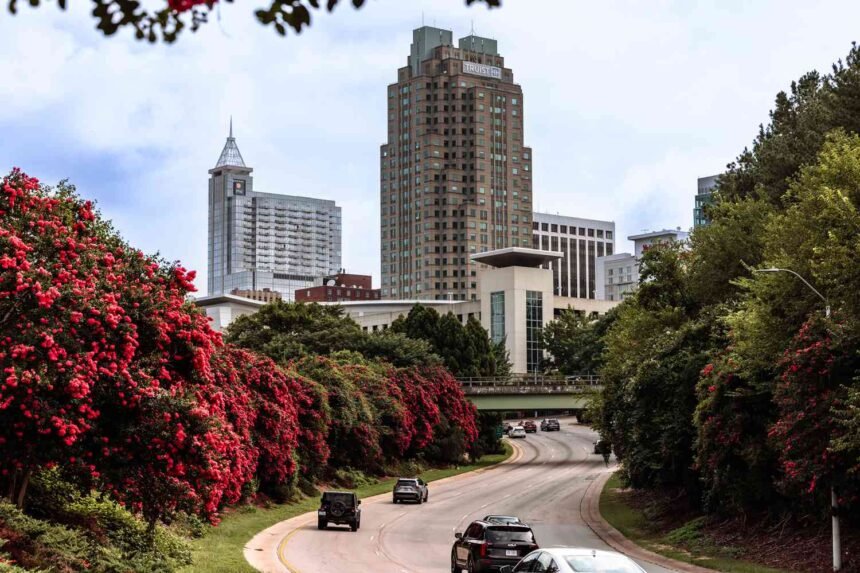
- Raleigh is a growing, diverse city with great employment opportunities.
- Charlotte, located on the South Carolina border, is home to a large international airport.
There are plenty of compelling reasons to call North Carolina home. The Tar Heel State is renowned for its exceptional medical and research facilities, as well as its top-ranked universities, including the University of North Carolina at Chapel Hill, Duke University, and North Carolina State University. Its residents enjoy all four seasons (with relatively mild winters), and, according to RentCafe, housing costs are currently 14 percent lower than the national average.
If you have your heart set on living in North Carolina—whether you’re a lifelong North Carolinian or you’re looking to relocate—you’ve got options for where to plant your roots. There’s something for everyone in this geographically and demographically diverse state. There are beach towns, mountain towns, busy cities with thriving job markets, quiet suburbs with green spaces, and small towns with tight-knit communities. So to pinpoint the very best places to live in North Carolina, we consulted local real estate experts. Read on to discover their picks.
Raleigh
Stephanie Pollak/Travel + Leisure
“Raleigh just works. It’s growing fast, but still has a grounded, approachable feel. Between the tech jobs, parks, events, and food, there is something for everyone,” Steven David Elliot of Fathom Realty tells Travel + Leisure. “People come for the opportunities and stay because it feels like home.” Home prices have also remained pretty stable over the past couple of years. According to Redfin, the median sale price of a home in Raleigh was around $440,000 in April 2025, a 3.4 percent increase from the year prior.
And if you’re not ready to buy? You’ll still likely find a good deal on rent; average rent in the capital city is $1,888, 10 percent lower than the national average. Juanita Corry Jackson of Juanita Jackson Realty recommends starting your search in the North Hills and Oakwood neighborhoods, which she says are “gaining popularity due to their blend of historic charm and modern amenities.”
Durham
zimmytws/Getty Images
Raleigh and Durham might be frequently lumped together, but, as any resident of either city will tell you, they’re decidedly different. Durham is smaller—with a population of around 290,000 compared to about 482,000 in Raleigh—and its culture leans more creative than corporate. Real estate in Durham is also more affordable. While the market is still competitive, the average home value is just over $410,000. Additionally, anyone working in the higher education, medical, or financial fields will have solid job prospects in Durham. Duke University, the Duke University Health System, and Fidelity are some of the largest employers in the area.
Chapel Hill
Ryan Herron/Getty Images
If you’re interested in a small town with a larger-than-life reputation, look no further than Chapel Hill. Part of the Research Triangle, Chapel Hill is home to the University of North Carolina—but there’s a lot more to it than college life. This is a destination where residents enjoy live music, public art, a quaint historic district, breweries, and a variety of local restaurants. While the housing market is pricey—the median sale price exceeds $600,000—there are several charming small towns just outside of Chapel Hill to consider. Those seeking more affordable prices should look around Mebane, Hillsborough, or Pittsboro; each is less than a 30-minute drive from downtown Chapel Hill.
Charlotte
espiegle/Getty Images
Elliot calls Charlotte a “solid choice” for those who want a “mix of city life and room to breathe.” It’s also ideal for frequent travelers; Charlotte Douglas International Airport is a major hub for American Airlines. “Charlotte keeps pushing forward. It’s got serious momentum, great job opportunities, a strong cultural scene, and neighborhoods like South End and NoDa that keep getting better,” he says. After the real estate boom of 2020 and 2021, the housing market hasn’t drastically changed; the average home value in Charlotte is just over $405,000.
Cary
zimmytws/Getty Images
“Cary is one of those places where everything is just easy. It’s safe, well-planned, and consistently delivers on quality of life. Great schools, clean neighborhoods, and the kind of quiet confidence that makes it a no-brainer for families,” says Elliot. While it was once considered a suburb of Raleigh, Cary has evolved into a distinct destination with its own unique identity. Residents enjoy a dynamic arts and culture scene and top-tier dining, and the relatively new Downtown Cary Park serves as a central gathering space for events and outdoor activities. Considering these factors, it may come as no surprise that the real estate market is rather competitive. Home prices have increased 5.7 percent from last year, so expect to pay around $690,000 (the current median price) for your home.
Winston-Salem
csreed/Getty Images
Winston-Salem is about as well-rounded a destination as they come, but it’s still on the more affordable side. The average home value is $257,523, and the overall cost of living is about 9 percent below the national average. Once you’ve secured your accommodations and made the big move to the area, you can start focusing on what else makes Winston so great: its numerous parks and 25 miles of greenways, a focus on education (it’s home to Wake Forest University), and small-town events such as movie nights and festivals. Plus, you’re within driving distance of the Blue Ridge Parkway and the Appalachian Trail, where scenic views and hiking paths await.
Wilmington
pabrady63/Adobe Stock
“Wilmington has been on the rise for a while now. You get the beach, a charming downtown, and a pace that is relaxed without being sleepy. It’s a great option if you want a lifestyle upgrade without giving up community or culture,” says Elliot. The port city is located between the Atlantic and the Cape Fear River, so it’s a wonderful spot for anyone who wants to spend their free time on or near the water—boating, fishing, swimming, etc. With a median home value of $416,708, Wilmington offers more affordable housing options than some of the larger coastal cities nearby in North and South Carolina.
Greensboro
Zenstratus/Adobe Stock
“Greensboro offers a comfortable lifestyle with a lower cost of living, ample green spaces, and a growing arts and culture scene,” says Jackson, noting that the average home price is about $300,000. Other factors to consider include its job market—manufacturing is a major industry in Greensboro—and its family-friendly nature. “Areas like Lindley Park and Fisher Park are becoming attractive due to their community-focused atmosphere and greenery,” she adds. There’s also the Greensboro Science Center, the Miriam P. Brenner Children’s Museum, and Wet ‘n Wild Emerald Pointe to keep the entire family entertained.
Fayetteville
DenisTangneyJr/Getty Images
Affordable housing is one of the biggest benefits of living in Fayetteville, a 209,000-person city that lies between Charlotte and Wilmington. As of April 2025, the median price was just $245,000, and rent is 33 percent lower than the national average ($1,400 vs. $2,100). Given its proximity to Fort Bragg, the Department of Defense is the largest employer in the area. Fayetteville does experience military turnover, so those looking for investment opportunities may be interested in the single-family home and rental market. Another perk of living in Fayetteville? Its proximity to major cities. It’s about a one-hour drive to Raleigh and about 2.5 hours to Charlotte.
Mooresville
J. Michael Jones/Adobe Stock
Big-city access meets lakeside living in Mooresville. Just a 30-minute drive from Charlotte, Mooresville, or “Race City, U.S.A”— it’s the location for many NASCAR and IndyCar races—sits on the shores of Lake Norman. The average home value is $484,825, though many of the lakefront homes sell for much higher. As a resident, you could spend your weekends boating around the lake, grabbing groceries at Steven’s Country Store & Butcher Shop, sipping and strolling in the Downtown Mooresville Social District, or poking around the town’s various shops and boutiques selling locally made wares.